

Flat roofs may look simple, but they often hide problems that can grow worse if ignored. Small cracks, pooling water, or worn materials can quickly turn into costly damage if left untreated. Knowing the signs that a flat roof needs repair helps prevent leaks, structural issues, and higher energy bills.
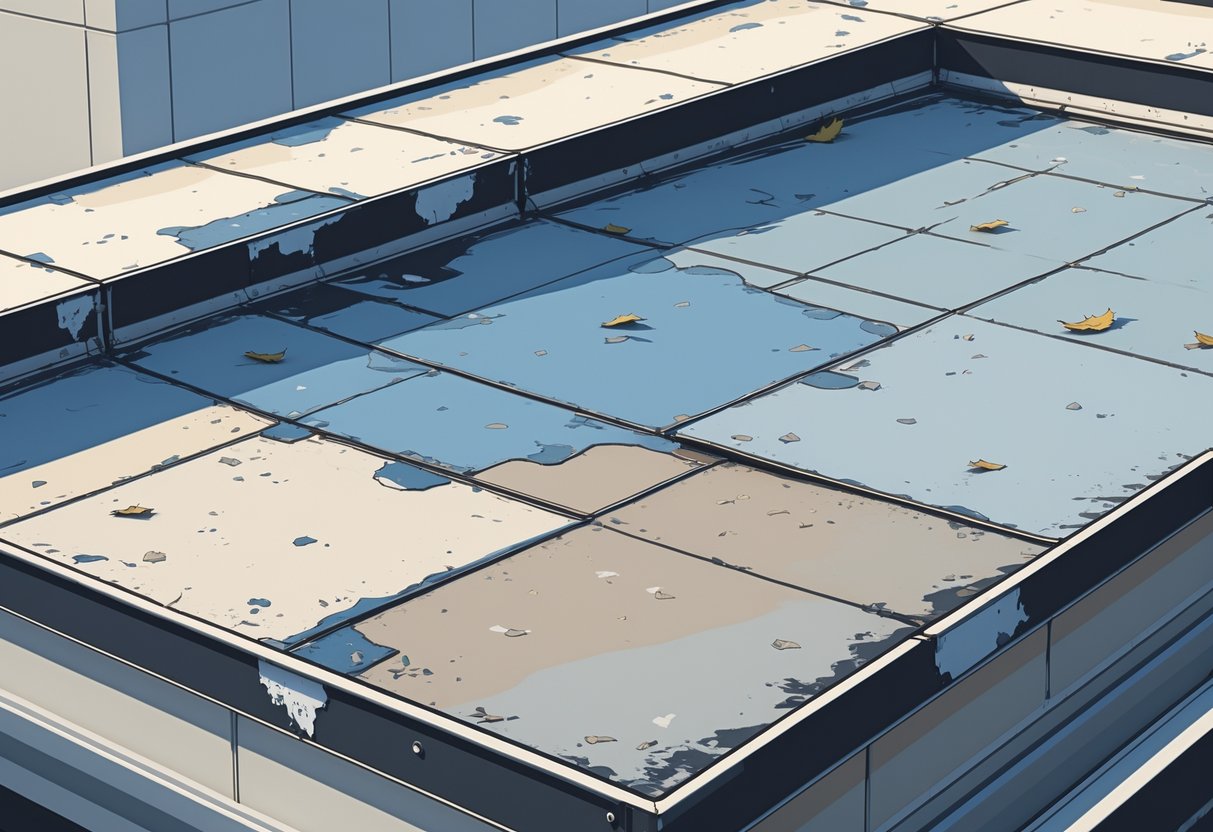
Many warning signs are easy to spot from the ground or during a quick inspection. Stains on ceilings, bubbling roof surfaces, or damaged flashing often signal that repairs are needed. By catching these problems early, property owners can extend the life of the roof and avoid expensive replacements.
A flat roof plays a major role in protecting a building, so paying attention to changes in its condition is essential. Spotting issues like loose membranes, water intrusion, or unusual wear ensures repairs happen before small problems spread.
Key Takeaways
- Spot visible and hidden signs of roof damage early
- Address surface wear, leaks, and energy loss quickly
- Schedule inspections to prevent costly repairs
Common Warning Signs of Flat Roof Damage
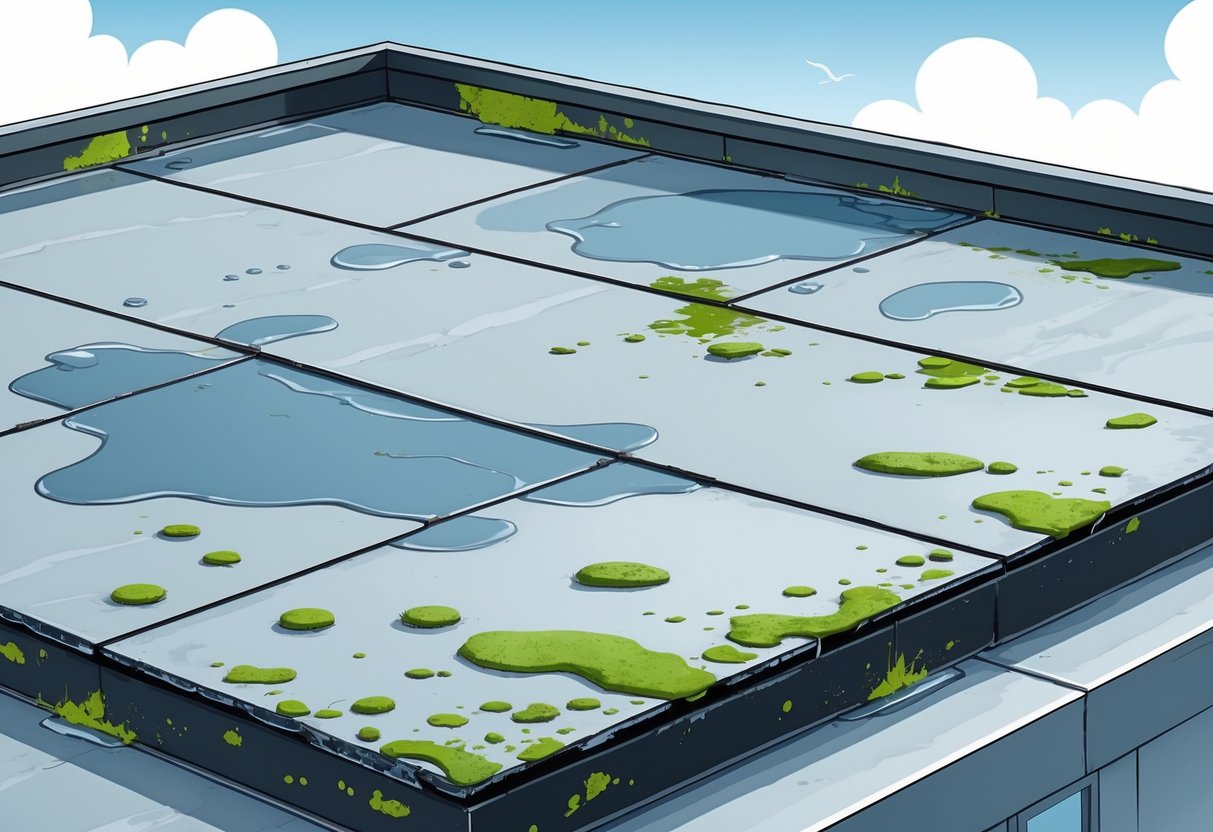
Flat roofs often show visible indicators when problems begin to develop. Issues like standing water, interior leaks, and surface damage can signal that the roof membrane or structure is compromised and needs timely attention.
Pooling or Standing Water
Pooling water, also called ponding water, occurs when rain or melting snow fails to drain within 24–48 hours. Flat roofs rely on a slight slope and working drains to move water off the surface. When this system fails, water collects in low spots.
Over time, standing water adds stress to the roof structure. The extra weight can weaken decking materials and shorten the life of the roof membrane. Modified bitumen and other common flat roof systems are especially vulnerable if water sits for long periods.
Signs of pooling include:
- Visible puddles that remain after rainfall
- Algae or moss growth in low areas
- Sagging or soft spots underfoot
Addressing drainage problems early can prevent leaks and structural damage. Regular inspections after storms help identify pooling before it worsens.
Water Stains and Interior Leaks
Water stains on ceilings or walls are a clear sign that moisture has entered the building. Leaks usually start small, often around seams, flashing, or penetrations like vents and skylights. Once water gets past the roof membrane, it can travel and appear in unexpected areas indoors.
Typical indicators include:
- Brown or yellow stains on ceilings
- Peeling paint or bubbling drywall
- Damp insulation or mold growth in attics
A flat roof leak may not always line up with the stain inside. Water can move along joists before showing up in living spaces. This makes early detection important, since hidden leaks can damage insulation, wood framing, and electrical systems.
Blistering, Cracks, and Surface Bubbling
Flat roof surfaces often develop blisters, cracks, or bubbles as they age. These defects form when air or moisture gets trapped beneath the roof membrane. Heat from the sun expands the trapped air, pushing the material upward.
Modified bitumen and similar membranes are prone to this problem if not installed or sealed correctly. Small blisters may not leak immediately, but they weaken the protective layer. Over time, cracks form and allow water to penetrate.
Warning signs include:
- Raised or bubbled areas on the roof surface
- Splits or cracks along seams and edges
- Peeling membrane that exposes the substrate
Prompt repair of these defects helps prevent leaks and extends the service life of the roof system. Regular maintenance can catch surface changes before they lead to costly roof damage.
Structural and Surface Issues
Flat roofs often show visible warning signs when they begin to fail. Problems such as sagging, damaged flashing, or a worn roof membrane can allow water to enter and weaken the structure, making timely flat roof repairs essential.
Sagging or Low Spots
Sagging areas or low spots usually form when poor drainage allows water to sit on the roof surface. Over time, the weight of ponding water can strain the roof deck and cause structural stress.
These areas often appear as shallow dips where water collects after rainfall. If left untreated, the trapped moisture can seep into the roofing layers and lead to leaks.
Key signs to look for:
- Standing water that lasts more than 48 hours
- Visible depressions in the roof surface
- Water stains inside the building directly below low spots
Addressing sagging quickly through proper drainage correction and structural reinforcement can prevent more costly roof repairs later.
Damaged or Loose Flashing
Flashing protects vulnerable points where the roof meets walls, vents, or skylights. When flashing becomes cracked, corroded, or pulls away, water can slip through gaps and enter the building.
Loose flashing often results from weather exposure, poor installation, or simple wear over time. Even small openings can allow leaks that spread moisture inside walls or ceilings.
Common issues with flashing include:
- Rust or corrosion on metal flashing
- Gaps between flashing and roof membrane
- Torn or missing sealant around roof penetrations
Replacing or resealing flashing is a straightforward flat roof repair that prevents more serious water damage. Regular inspection of these areas helps catch problems before they worsen.
Exposed or Worn Roof Membrane
The roof membrane serves as the main barrier against water. When it becomes cracked, blistered, or starts peeling away, the roof loses its ability to stay watertight.
Damage often comes from UV exposure, aging materials, or foot traffic on the roof. Once the membrane loosens or wears thin, water can seep beneath the surface and spread quickly.
Warning signs include:
- Sections of membrane lifting or peeling
- Cracks, bubbles, or blisters on the surface
- Areas where the protective layer is missing altogether
Prompt flat roof repairs to reseal or replace damaged membrane sections help maintain the roof’s integrity and extend its service life.
Moisture Problems and Indoor Effects
Moisture from a damaged flat roof often shows up inside before the problem is spotted outside. Water intrusion can create visible stains, unpleasant smells, and health concerns if left untreated.
Mold and Mildew Growth
When leaks form in a flat roof, water can seep into ceilings, walls, or insulation. Damp surfaces provide the right conditions for mold and mildew to spread. These growths often appear near water stains or dark patches on drywall.
Mold is not only a cosmetic issue. It can weaken building materials and cause them to deteriorate faster. For example, wood framing or ceiling panels exposed to moisture may soften or rot over time.
Homeowners should also check less visible areas like attics or crawl spaces. Even small roof damage can allow enough moisture to support hidden mold colonies. Regular inspections help prevent these issues from spreading unnoticed.
Signs to watch for include:
- Black, green, or white spots on ceilings or walls
- Peeling paint or bubbling drywall
- Recurring dampness in the same areas after rainfall
Musty Odors and Indoor Air Quality
Moisture problems often cause a musty smell indoors. This odor usually comes from mildew or mold that grows in damp materials. It may be strongest in rooms directly under the roof or near areas with visible roof damage.
Poor indoor air quality can result when spores circulate through the HVAC system. People may notice irritation in their throat, nose, or eyes when spending time in these spaces.
Unlike water stains, odors can appear even when leaks are not visible. This makes them an early warning sign of hidden moisture.
Key indicators include:
- Persistent musty smell after cleaning
- Odor stronger in humid weather
- Air feeling damp or heavy indoors
Addressing the roof leak quickly reduces these effects and helps restore a healthier indoor environment.
Performance and Efficiency Red Flags
Flat roofs can show signs of reduced performance long before major leaks appear. Energy costs and the condition of roofing materials often provide the clearest warnings that attention or repairs are needed.
Rising Energy Bills
When a flat roof loses its ability to insulate, heating and cooling systems must work harder. This often shows up as higher energy bills without a clear change in usage. A damaged or poorly sealed roof allows air to escape, which reduces efficiency inside the building.
Common causes include:
- Loose or worn roof membrane
- Gaps around flashing or seams
- Moisture weakening insulation beneath the surface
If insulation becomes saturated from leaks, it no longer regulates temperature. Modified bitumen and other flat roof systems rely on intact layers to prevent this problem.
Property owners should compare utility bills from the same season in past years. A steady increase may point to roof inefficiency rather than HVAC issues. In many cases, flat roof repair or partial replacement of damaged sections restores proper insulation and lowers costs.
Aging or Deteriorating Roof Materials
Flat roofs naturally wear down over time. Materials such as modified bitumen can crack, blister, or peel after years of sun exposure and temperature swings. These changes reduce waterproofing and energy performance.
Signs of deterioration may include:
- Surface cracks or splits
- Bubbling or blistering in the membrane
- Thinning or brittle areas near seams
As materials age, they allow more heat transfer and water intrusion. Small defects can spread quickly, leading to larger failures that may require roof replacement instead of simple repair.
Routine inspections help identify when the roofing membrane is past its service life. Addressing aging materials early often extends the roof’s lifespan and delays the need for costly replacement.
Inspection and Professional Assessment
Flat roof problems often start small and go unnoticed until they cause visible damage. Regular inspections and choosing a qualified roofing expert help prevent costly repairs and extend the life of the roof.
When to Schedule a Flat Roof Inspection
A flat roof inspection should be done at least once a year. Many roofing experts also recommend scheduling an additional inspection after major storms with heavy rain, hail, or strong winds. Severe weather can loosen flashing, puncture membranes, or cause pooling water that isn’t visible from the ground.
Property owners should also arrange an inspection if they notice water stains on ceilings or walls, higher energy bills, or visible cracks on the roof surface. These are early signs that the roof may be compromised.
Commercial buildings benefit from more frequent inspections because of larger roof areas and heavier use of rooftop equipment. In these cases, inspections every six months can help detect issues like blocked drains or membrane damage before they spread.
Inspections usually include checking for:
- Standing water or poor drainage
- Damaged or loose flashing
- Cracks, blisters, or punctures in the membrane
- Signs of leaks inside the building
By scheduling inspections on time, owners can address minor repairs before they turn into expensive replacements.
Choosing a Qualified Roofing Contractor
Selecting the right roofing contractor is as important as the inspection itself. A qualified contractor should have experience with flat roof systems, since these differ from pitched roofs in design and maintenance needs.
Property owners should verify that the contractor holds proper licensing and insurance. This protects against liability if an accident occurs during the inspection or repair. Asking for references from past flat roof projects also helps confirm the contractor’s reliability.
It is useful to compare at least two or three contractors. Reviewing written estimates allows owners to see the scope of work, materials, and costs in detail. A clear contract should outline inspection steps, repair methods, and warranties.
For commercial buildings, a contractor with experience in large-scale flat roof inspections is essential. They should be familiar with drainage systems, rooftop equipment, and energy efficiency concerns.
By choosing a skilled roofing expert, property owners gain accurate assessments and solutions tailored to their specific roof type.
The Importance of Timely Flat Roof Repairs
Addressing flat roof issues quickly reduces the risk of leaks spreading, prevents structural strain, and helps avoid higher costs from major repairs or full roof replacement. Regular roof maintenance also supports energy efficiency and extends the useful life of the roofing system.
Preventing Further Damage
Flat roofs are more prone to water pooling than sloped roofs. When repairs are delayed, standing water can seep into the roof membrane and weaken the structure beneath. Over time, this creates leaks that spread into ceilings and walls.
Moisture intrusion also encourages mold growth and can damage insulation. This leads to higher heating and cooling costs and health concerns inside the building.
Small issues such as cracks, loose flashing, or blistering may seem minor, but they often expand with weather exposure. Wind can lift loose material, while UV rays can dry and crack the surface.
Timely flat roof repairs stop these problems before they require full roof replacement. A simple patch or reseal is far less costly than repairing structural damage caused by years of neglect.
Key risks of delaying repairs:
- Water damage to ceilings and walls
- Higher repair costs over time
- Reduced roof lifespan
- Mold and insulation damage
Protecting Property Value
A well-maintained flat roof protects more than the structure—it also safeguards property value. Buyers and tenants often view a roof in poor condition as a major expense, which can lower resale or rental value.
Roof maintenance records and timely repairs show that the property has been cared for. This makes inspections smoother and gives potential buyers confidence in the building’s condition.
Energy efficiency also plays a role. A damaged roof with poor insulation or leaks forces heating and cooling systems to work harder. This increases utility bills and reduces the building’s appeal.
By investing in flat roof repairs at the right time, owners avoid sudden large expenses and preserve the long-term value of their property. In many cases, smaller repairs now prevent the need for a costly roof replacement later.
Benefits of timely repairs for property value:
- Better resale potential
- Improved energy efficiency
- Stronger buyer confidence
- Lower risk of unexpected expenses
Frequently Asked Questions
Flat roofs often show visible signs when problems develop. Issues like leaks, surface damage, and drainage failures can point to the need for repair. Recognizing these signs early helps prevent further damage to the structure.
What are the common indicators of water damage on a flat roof?
Water stains on ceilings or walls often signal leaks from the roof. Damp patches, peeling paint, or mold growth inside the building are also strong indicators. On the roof itself, soft spots or darkened areas may show trapped moisture.
How can you tell if a flat roof is nearing the end of its lifespan?
An aging flat roof may show widespread cracking, thinning, or separation of the membrane. Frequent leaks or repeated repairs can also suggest the roof is reaching its limit. Increased energy costs due to poor insulation may be another sign of decline.
What signs of wear and tear should you look for during a flat roof inspection?
Look for cracks, blisters, or peeling on the roof surface. Damaged flashing around vents or skylights can also signal wear. Discoloration, uneven surfaces, or loose materials are additional signs to note.
Are there specific weather-related damages to flat roofs that require immediate attention?
Yes. Heavy storms can cause punctures from flying debris. High winds may lift or loosen the roof membrane. Extreme heat or cold can create cracks or splits that allow water to enter.
How does ponding water signify the need for flat roof repairs?
When water remains on the roof for more than 48 hours after rainfall, it suggests poor drainage. This standing water can weaken the roof structure and increase the risk of leaks. It may also promote algae or mold growth.
What are the implications of blistering or bubbling on the surface of a flat roof?
Blisters or bubbles form when air or moisture becomes trapped under the roofing material. These weak spots can eventually crack and allow water to penetrate. If left untreated, they can spread and cause larger sections of damage.