

Flat roofs may look sleek and modern, but they come with one big challenge: drainage. When water lingers for more than two days, it creates ponding that can shorten the life of the roof and lead to costly repairs. The best way to prevent ponding is to make sure the roof drains water efficiently before heavy rains arrive.
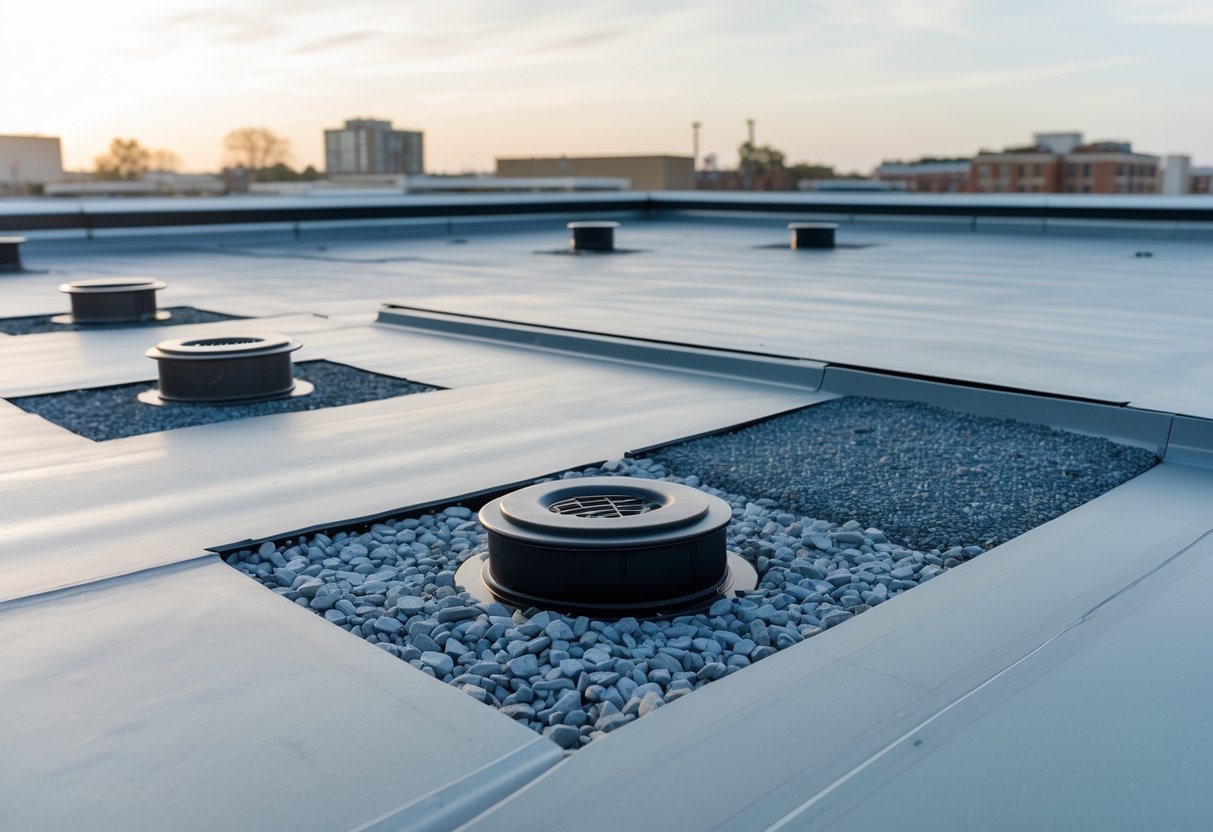
Many drainage issues start small, such as clogged scuppers, blocked gutters, or a roof slope that is too shallow. Over time, these problems create low spots where water collects. Left alone, that standing water can weaken materials, cause leaks, and even affect the structure beneath the roof.
The good news is that proper design, routine maintenance, and timely fixes can stop ponding before it becomes serious. By understanding what causes poor drainage and how to address it, anyone with a flat roof can protect their building and avoid unnecessary damage.
Key Takeaways
- Ponding water weakens a flat roof and shortens its lifespan
- Proper slope and clear drainage paths stop water from collecting
- Regular inspections and upgrades prevent long-term damage
Understanding Ponding Water and Its Dangers
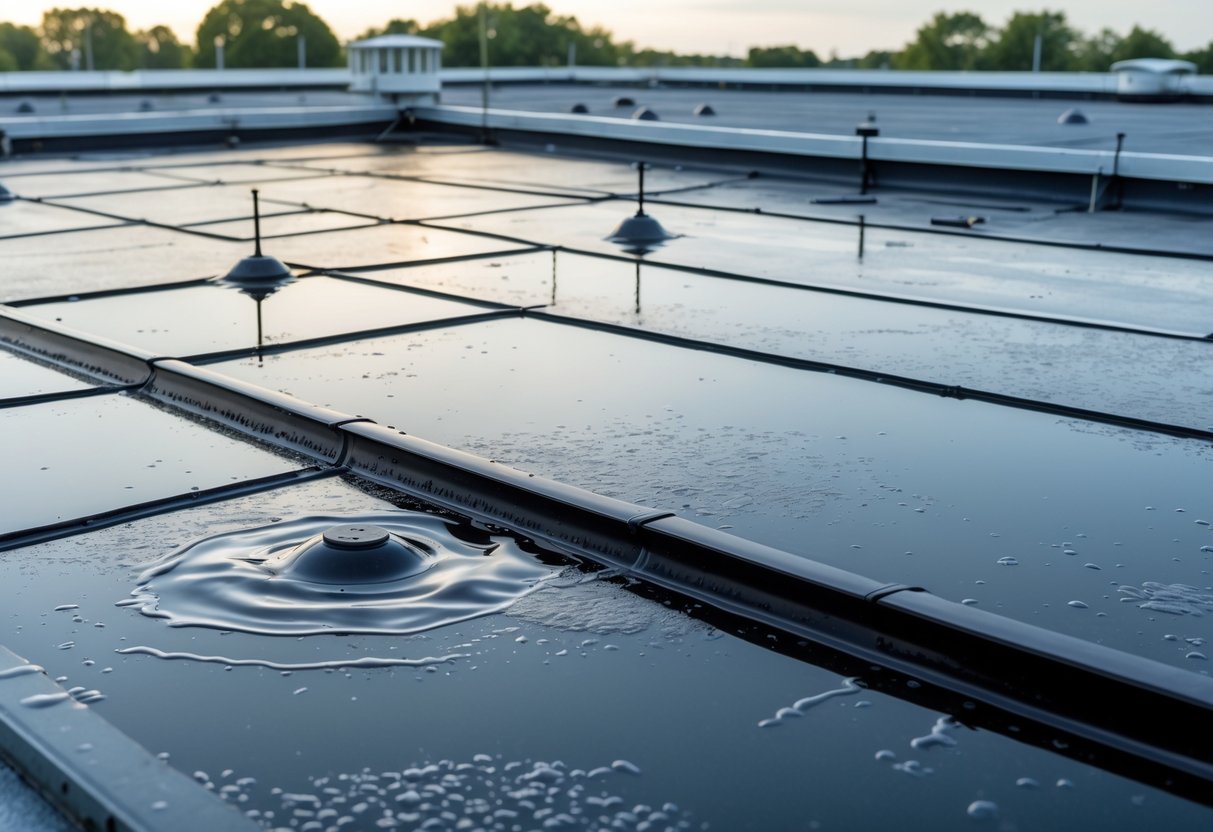
Ponding water on flat roofs develops when rainwater does not drain within a short period. This standing water can weaken roofing materials, shorten the roof’s lifespan, and create costly repair needs if left unaddressed. It also raises concerns about building safety and warranty coverage.
What Is Ponding Water on Flat Roofs?
Ponding water occurs when rainwater or melted snow remains on a flat roof for more than 48 hours. Unlike pitched roofs, flat roofs rely on slight slopes and drainage systems to move water away. If the slope is inadequate or drains become blocked, water collects in low spots.
This condition is not just a cosmetic issue. Standing water increases the load on the roof surface, especially after heavy rainfall. Over time, the constant weight and moisture weaken roofing membranes and can lead to leaks.
Common causes include:
- Poor drainage design
- Clogged gutters, scuppers, or interior drains
- Settling of the building structure
- Deterioration of roofing materials
Each of these factors contributes to water pooling, which can become more severe as the roof ages.
Risks of Water Accumulation and Standing Water
When water remains on a flat roof, it creates several risks. Moisture trapped on the surface accelerates wear on roofing membranes, making them brittle or cracked. This damage allows water to seep beneath the surface, leading to leaks inside the building.
Standing water also attracts dirt and debris, which can clog drains further. In warmer months, pooled water may encourage algae or plant growth, which damages roofing materials. In colder climates, freezing water expands and worsens small cracks.
Another concern is added weight. One inch of water over 100 square feet weighs more than 500 pounds. If water covers large areas, the roof may experience stress that exceeds design limits. This strain increases the chance of sagging or collapse in severe cases.
Structural Damage and Warranty Concerns
Structural damage from ponding water often develops slowly. As water sits in depressions, it seeps into seams and weak spots. Over time, trapped moisture corrodes metal components, rots wood decking, and weakens insulation. These issues reduce the roof’s ability to support its intended load.
Many roofing warranties specifically exclude damage caused by ponding water. If an inspection shows that drainage problems were ignored, the manufacturer may deny coverage. This leaves the property owner responsible for costly repairs or full roof replacement.
Insurance claims can also be affected. If ponding water is considered a maintenance issue, coverage may be limited. Regular inspections, prompt drainage repairs, and proper slope adjustments are often required to keep warranties valid and avoid disputes.
Key Causes of Drainage Issues on Flat Roofs
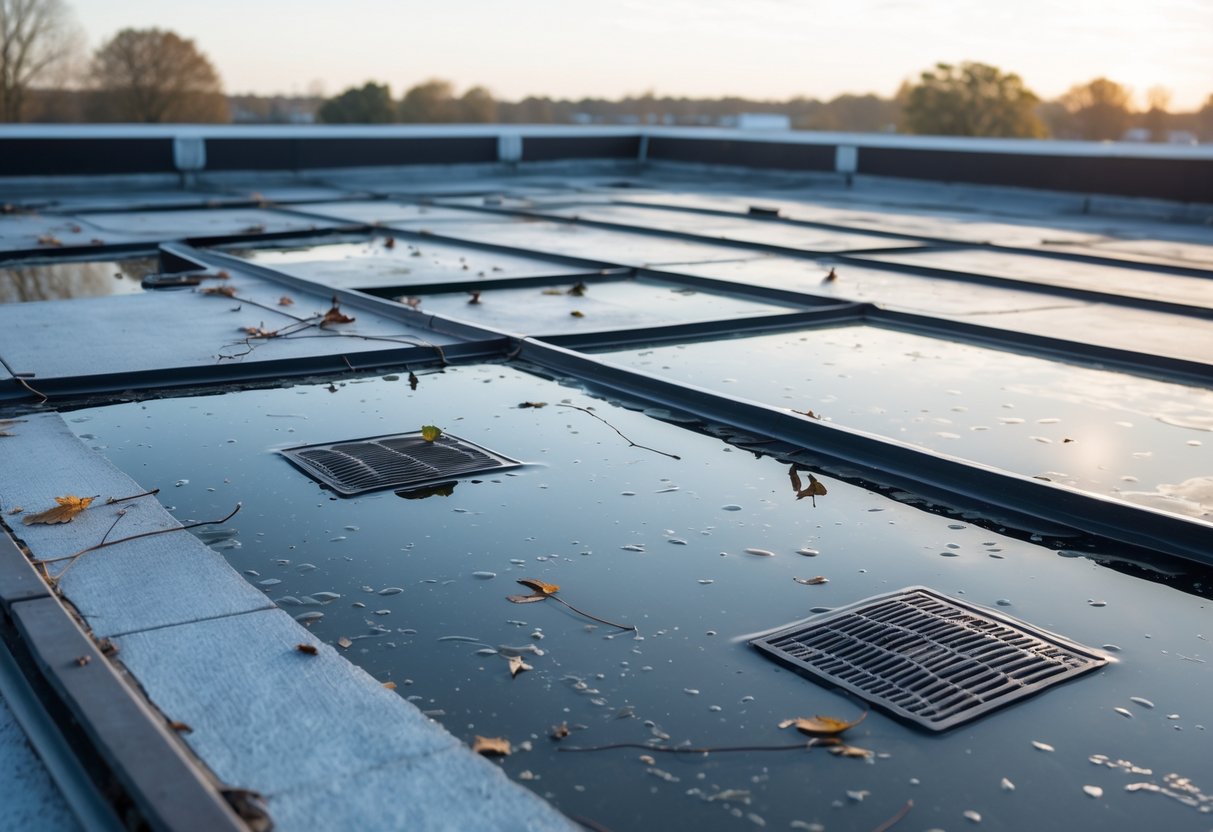
Water problems on flat roofs often come from design flaws, neglected maintenance, or aging materials. When slope is inadequate, drains get blocked, or membranes fail, water has nowhere to go and begins to collect, leading to leaks, structural stress, and costly repairs.
Insufficient Roof Slope and Settling
Flat roofs are rarely completely level. They are usually built with a slight slope—often at least 1/4 inch per foot—to guide water toward drains or scuppers. When this slope is missing or too shallow, water accumulates instead of flowing away.
Over time, buildings naturally settle. This settling can create low spots or depressions where water collects. Even if the original slope was adequate, structural shifts may reduce its effectiveness.
Ponding water that lingers for more than 48 hours after rain often points to slope or settling problems. Long-term ponding increases the load on the roof and accelerates membrane wear.
Correcting slope issues usually requires professional intervention, such as tapered insulation systems or regrading the roof surface. These solutions restore proper drainage patterns and reduce the risk of recurring water accumulation.
Clogged Drains, Gutters, and Scuppers
Flat roof drainage systems depend on open pathways to move water off the surface. When drains, gutters, or scuppers become clogged with leaves, dirt, or debris, water flow slows or stops entirely.
Blocked components often cause water to back up and spread across the roof. Overflowing gutters may also direct water against walls or foundations, creating new structural concerns.
Routine cleaning is the most effective way to prevent clogs. A simple checklist includes:
- Remove leaves and dirt from drain grates.
- Flush gutters and downspouts to ensure clear flow.
- Inspect scuppers for obstructions after storms.
Neglecting these tasks can turn a minor blockage into a major drainage failure, especially during heavy rainfall.
Aging Roofing Materials and Membrane Failure
Even with proper slope and clear drains, drainage can fail if the roofing materials degrade. Flat roofs often rely on a roof membrane—such as EPDM, TPO, or modified bitumen—to keep water out.
Over time, exposure to sunlight, temperature changes, and standing water weakens the membrane. Cracks, blisters, or loose seams allow water to seep beneath the surface. Once water penetrates, it can damage insulation and shorten the roof’s lifespan.
Flashing around drains and scuppers is another weak point. If flashing separates or corrodes, water bypasses the drainage system and enters the building.
Regular inspections help catch early signs of membrane failure. Timely repairs or partial replacements can extend the life of the drainage system and prevent more serious structural damage.
Essential Flat Roof Drainage Solutions
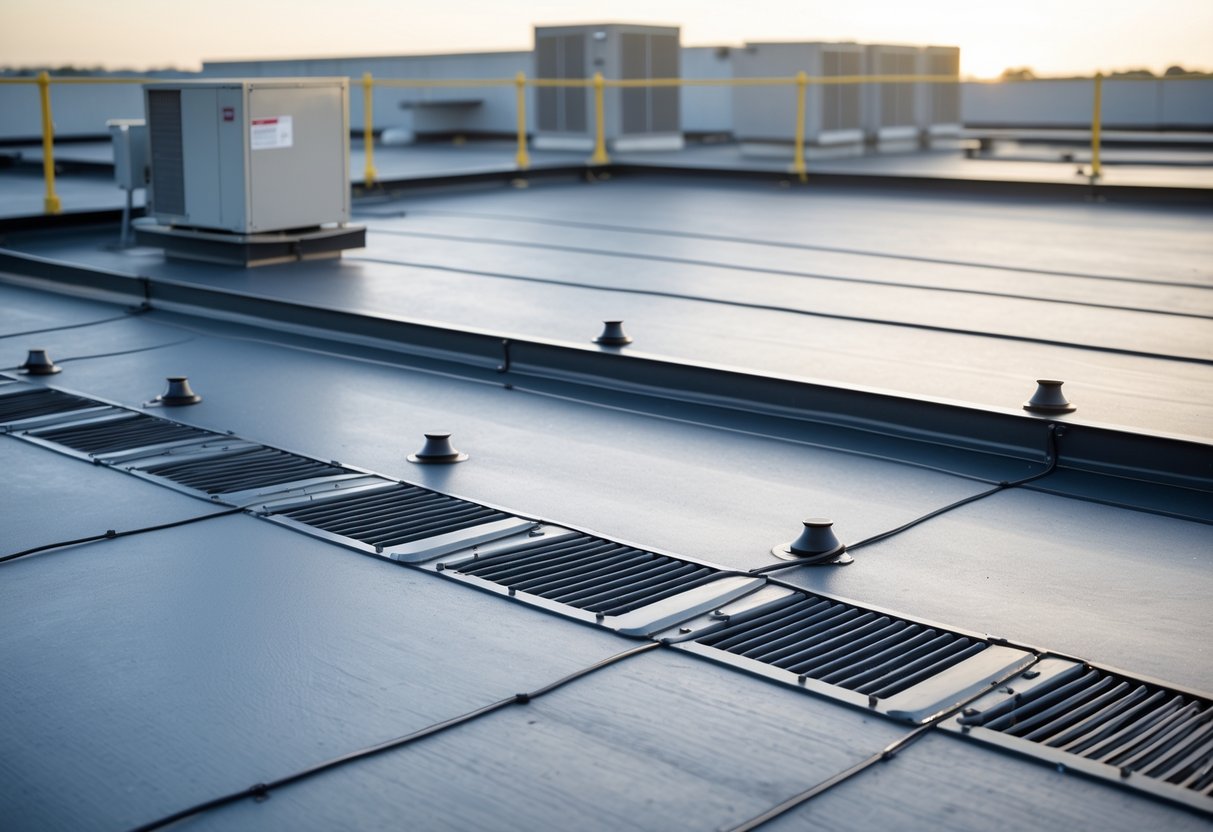
Flat roofs need well-planned drainage systems to prevent standing water, structural stress, and premature roof wear. Effective solutions combine slope adjustments, internal piping, and edge outlets to keep water moving off the surface quickly and safely.
Tapered Insulation Systems for Improved Slope
A flat roof is never truly flat. Builders often use tapered insulation systems to create a slight slope that directs water toward drains or scuppers. This design reduces ponding and helps water flow within 24–48 hours after rainfall.
Tapered insulation can be installed during new construction or added when re-roofing. It uses insulation boards cut at angles to form a slope, often ranging from 1/8″ to 1/4″ per foot.
Adding roof crickets—small ridges that divert water around obstructions like HVAC units or chimneys—further improves drainage. These features prevent water from collecting in dead spots where leaks are more likely to occur.
Although tapered insulation increases upfront costs, it improves both drainage performance and energy efficiency. The added insulation value helps regulate indoor temperature while extending the roof’s lifespan.
Interior Drains and Overflow Protection
Interior drains are placed at low points of the roof and connect to concealed piping that carries water away from the building. This system is common in larger buildings where gutters alone cannot handle the volume of runoff.
Because the drains sit inside the roof, they protect exterior walls and landscaping from water staining. They also reduce the risk of water pooling near the foundation.
Maintenance is critical. Leaves, dirt, and debris can clog the drain, leading to ponding and leaks. Building owners should inspect drains at least twice a year and after major storms.
Many systems include overflow drains as a backup. These secondary outlets activate when the main drain is blocked, preventing excessive water weight and potential roof collapse.
Optimizing Scuppers and Gutters Placement
Scuppers are openings along the roof edge that allow water to exit into downspouts or gutters. When sized and placed correctly, they provide a simple and reliable way to move water off the roof surface.
Pairing scuppers with gutters and downspouts ensures water is directed away from walls and foundations. Without this pairing, runoff can stain walls or erode landscaping.
Placement matters. Scuppers should be installed at the roof’s lowest points, while gutters must be sloped slightly to keep water moving toward downspouts.
Although gutters require regular cleaning to prevent clogging, they remain one of the most cost-effective drainage solutions. Properly designed systems reduce standing water and protect the structure from long-term moisture damage.
Preventive Maintenance and Early Detection
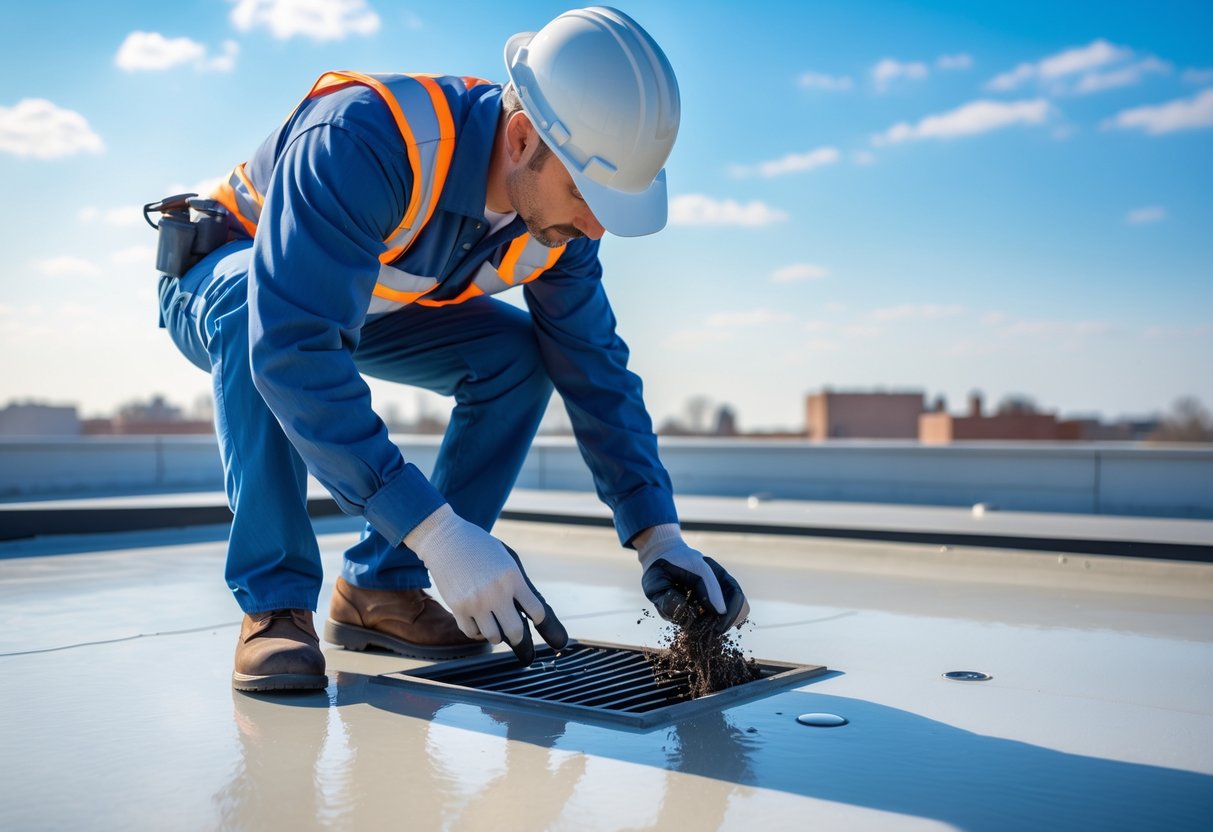
Flat roofs require consistent care to keep water moving off the surface. By focusing on inspections, cleaning, and attention to low areas, property owners can reduce the risk of ponding water and extend the life of the drainage system.
Routine Inspections After Rainfall
Checking the roof soon after rainfall helps identify problems while water is still visible. If water remains on the surface for more than 48 hours, it may signal poor drainage or an uneven slope.
A simple walk across the roof can reveal standing water, clogged drains, or signs of stress on the roofing material. Inspectors should also look for stains, blistering, or soft spots that suggest long-term water accumulation.
Regular inspections allow small issues to be corrected before they weaken the roof structure. Property managers who schedule checks after heavy storms often prevent damage that would otherwise go unnoticed.
Clearing Debris from Drains and Gutters
Leaves, dirt, and small branches often block drains and gutters, slowing the flow of water. Even a partial clog can cause ponding water to form in low areas of flat roofs.
Maintenance crews should remove debris by hand or with simple tools. Using water to flush drains can confirm that the line is clear all the way through.
A clean drainage system reduces weight on the roof and prevents leaks caused by backed-up water. Setting a schedule for cleaning in fall and spring ensures that drains remain effective during rainy seasons.
Monitoring for Low Spots and Water Accumulation
Over time, flat roofs may settle or sag, creating shallow depressions where water collects. These low spots are common near seams, joints, or areas with heavy foot traffic.
Marking and measuring these areas after rainfall helps track whether they are getting worse. If ponding water repeatedly appears in the same location, adjustments to the slope or repairs to the surface may be needed.
In some cases, adding tapered insulation or installing extra drains can correct the issue. Addressing low spots early prevents long-term stress on roofing materials and helps maintain proper drainage across the entire roof.
Long-Term Protection and Material Upgrades
Flat roofs require more than just good drainage design to stay in good condition. Long-term performance depends on protective coatings, durable roofing materials, and resistance to sunlight that can weaken the roof surface over time.
Waterproofing and Roof Coatings
Waterproofing is essential for areas where water cannot drain quickly. Roof coatings add a protective layer over the roof membrane to reduce wear in low spots and extend service life.
Silicone-based roof coatings are often used because they resist ponding water and remain flexible in changing weather. Elastomeric coatings can also help, especially when applied over older membranes that need reinforcement.
Proper preparation is critical. Surfaces should be cleaned of dirt, algae, and debris before applying any coating. Using a compatible primer or flashing sealant around penetrations improves adhesion and prevents leaks at weak points.
Coatings do not fix poor drainage, but they protect the membrane in shallow depressions and behind rooftop units where water may linger. When chosen correctly, they can delay the need for a full roof replacement.
Selecting Durable Roofing Materials
Material choice plays a large role in how well a flat roof resists ponding water. Modified bitumen membranes, for example, are widely used because they provide strength, flexibility, and layered waterproofing.
Single-ply membranes such as TPO and PVC are lightweight and reflective, but they can be more sensitive to standing water if seams are not sealed properly. In contrast, SBS-modified bitumen handles temperature shifts and minor movement without cracking.
Durable insulation boards, especially tapered polyiso, help maintain slope and prevent depressions where water collects. Reinforced membranes and adhesives that provide full-surface bonding reduce the risk of blisters and separation.
Selecting materials with proven performance in ponding conditions ensures the roof system remains watertight under stress.
UV Exposure and Membrane Longevity
Flat roofs are exposed to constant sunlight, which breaks down roofing materials over time. UV exposure can cause membranes to dry out, crack, or lose flexibility, especially in asphalt-based systems.
Reflective coatings reduce surface temperature and slow UV damage. White or light-colored membranes such as PVC and some modified bitumen products also help limit heat absorption.
Regular inspections are important because UV damage often starts at seams and transitions. Applying UV-resistant coatings or selecting membranes with built-in reflective surfaces extends the lifespan of the roof.
Managing UV exposure is as important as controlling water, since both factors directly affect how long the roof system lasts.
Frequently Asked Questions
Flat roof drainage depends on proper design, timely maintenance, and the right corrective measures. Addressing issues such as ponding, clogged drains, and poor slope helps extend roof life and prevent costly repairs.
What are the most effective methods for improving flat roof drainage?
The most effective methods include adding internal drains, installing scuppers, and using tapered insulation to create slope. In some cases, contractors also build crickets to divert water around rooftop units or low areas.
How can I prevent water ponding on my flat roof?
Regularly clearing debris from drains and gutters reduces blockages. Ensuring the roof has adequate slope through tapered insulation or corrective overlays also prevents water from collecting after rainfall.
What are the consequences of inadequate drainage on a flat roof?
Poor drainage can cause leaks, insulation damage, and structural stress from excess water weight. Over time, it may also void manufacturer warranties and shorten the roof’s service life.
Can installing additional drains help with flat roof water accumulation?
Yes. Adding new drains in low-lying sections can significantly reduce standing water. The cost varies, but even a few well-placed drains often solve persistent ponding issues without requiring full roof replacement.
What maintenance steps are essential for ensuring proper flat roof drainage?
Routine inspections after heavy rain are important. Clearing leaves, dirt, and debris from drains and scuppers prevents clogs. Checking for depressions or membrane damage helps identify problems before they worsen.
Are there specific building codes that address flat roof drainage requirements?
Yes. Most building codes require flat roofs to drain water within 48 hours of rainfall. Codes also specify minimum slope requirements, commonly at least 1/4 inch per foot, to ensure proper runoff.