

Replacing a roof often comes down to two main choices: adding a new layer of shingles over the old ones or removing the existing materials completely. Each option has its place, but the right choice depends on the current condition of the roof, long-term plans for the home, and budget. Reroofing works best when the existing shingles are in fair shape, while a tear-off makes sense when the roof shows damage, leaks, or has multiple layers.
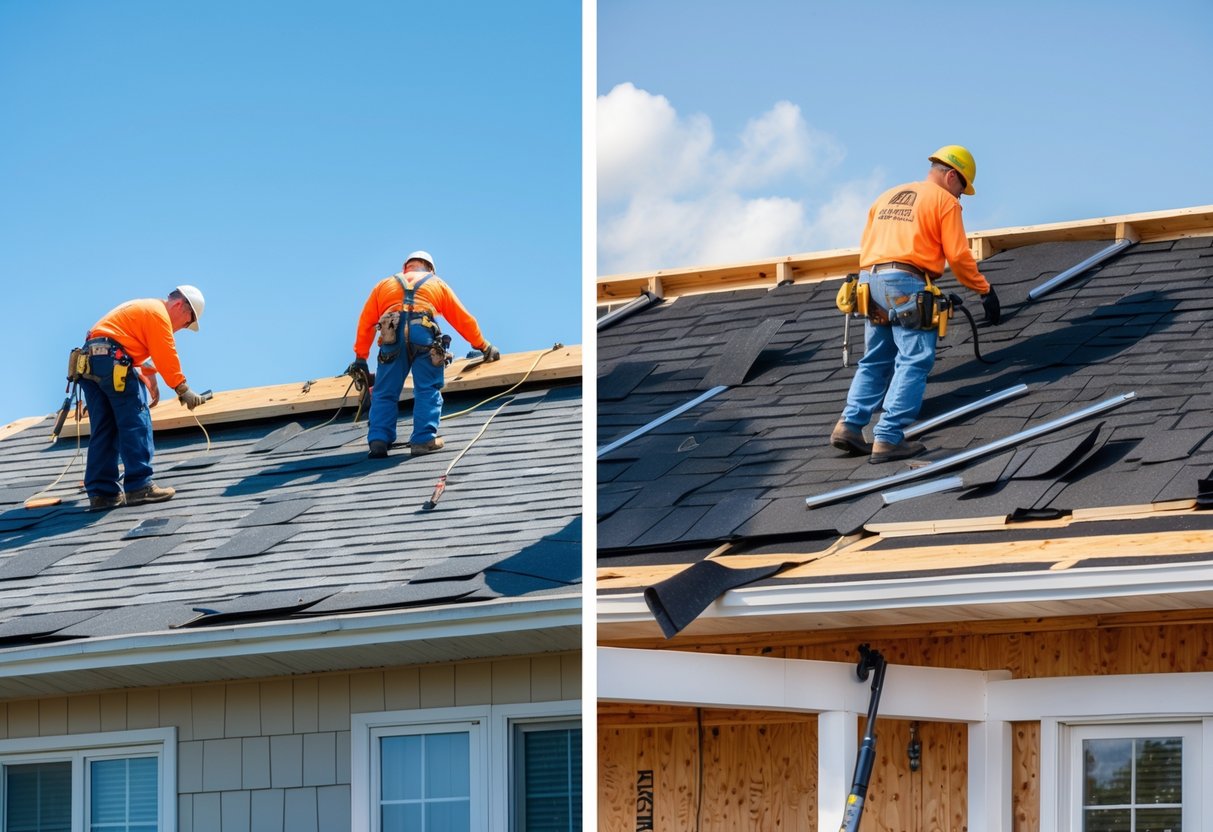
A reroof can save money and time, but it may only serve as a short-term solution. A full tear-off costs more upfront, yet it provides a fresh start, longer lifespan, and often stronger warranty coverage. Knowing when each method applies helps avoid costly mistakes and ensures the roof performs as expected.
Key Takeaways
- Reroofing offers a faster, lower-cost option if the roof is in good condition
- A tear-off provides durability, full inspection, and longer-term value
- The right choice depends on roof condition, budget, and future plans
Understanding Reroofing and Tear-Off Methods
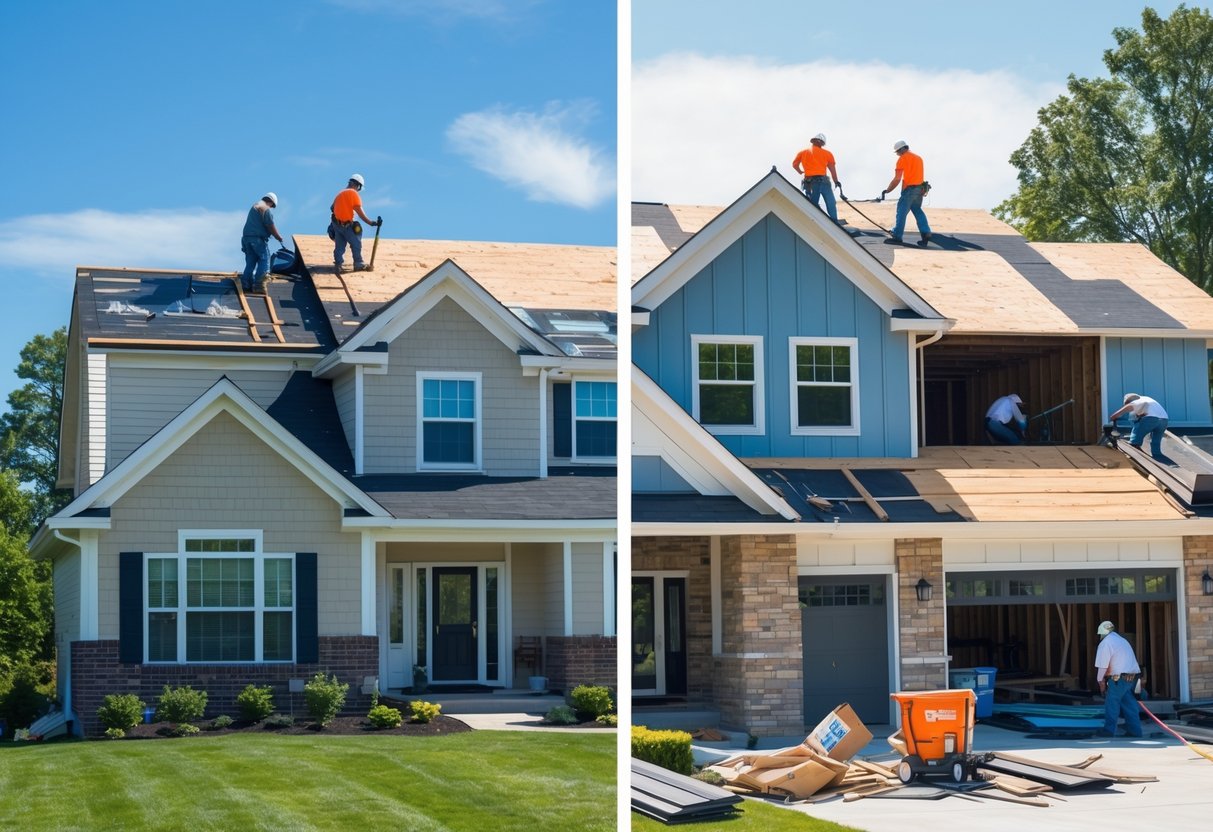
Roof replacement can be done in two main ways: adding a new layer of shingles over the old roof or removing the existing materials completely. Each method has its own process, cost, and long-term effect on durability.
What Is Reroofing?
Reroofing, also called a roof overlay or re-roof, means placing a new layer of shingles directly on top of the existing roof. It is usually limited to asphalt shingles and is only allowed when there is one layer already in place.
This method is often chosen because it lowers labor costs and speeds up installation. Since the old shingles are not removed, there is less debris to haul away, which can make the project more affordable and less disruptive.
However, reroofing has limits. If the current shingles are curled, cracked, or trapping moisture, covering them can hide damage and lead to bigger issues later. It also does not allow inspection of the roof deck, so problems like rot or sagging may go unnoticed.
Reroofing works best as a short-term solution when the existing roof is in fairly good condition and the homeowner wants to save money upfront.
What Is a Full Tear-Off?
A full tear-off removes all roofing materials down to the decking. This approach gives roofers a clean surface to work with and allows them to check for structural problems like rot, mold, or weakened wood.
The process takes more time and costs more than a reroof. It involves stripping the entire roof, disposing of the old shingles, and installing new underlayment and shingles. This creates a solid base for the replacement roof.
The benefits are clear. A tear-off often results in a longer-lasting roof, stronger manufacturer warranties, and better resale value. It also allows upgrades, such as switching from shingles to metal or improving attic ventilation and insulation.
A tear-off is usually required if the roof already has two layers of shingles, if leaks are widespread, or if the homeowner plans to stay in the house long-term.
Key Differences Between Reroof and Tear-Off
The main difference lies in whether the old roofing materials are removed. Reroofing adds a second layer, while a tear-off starts fresh with the deck exposed. Each method impacts cost, lifespan, and inspection opportunities.
Comparison Table:
| Factor | Reroof (Overlay) | Full Tear-Off |
|---|---|---|
| Cost | Lower upfront | Higher upfront |
| Installation Time | Faster | Slower |
| Deck Inspection | Not possible | Full inspection allowed |
| Roof Lifespan | Shorter | Longer |
| Resale Value | May reduce buyer confidence | Often improves buyer confidence |
Homeowners often choose reroofing for short-term savings, while a full tear-off provides longer durability and peace of mind. The right choice depends on roof condition, budget, and long-term plans.
When to Choose Reroofing
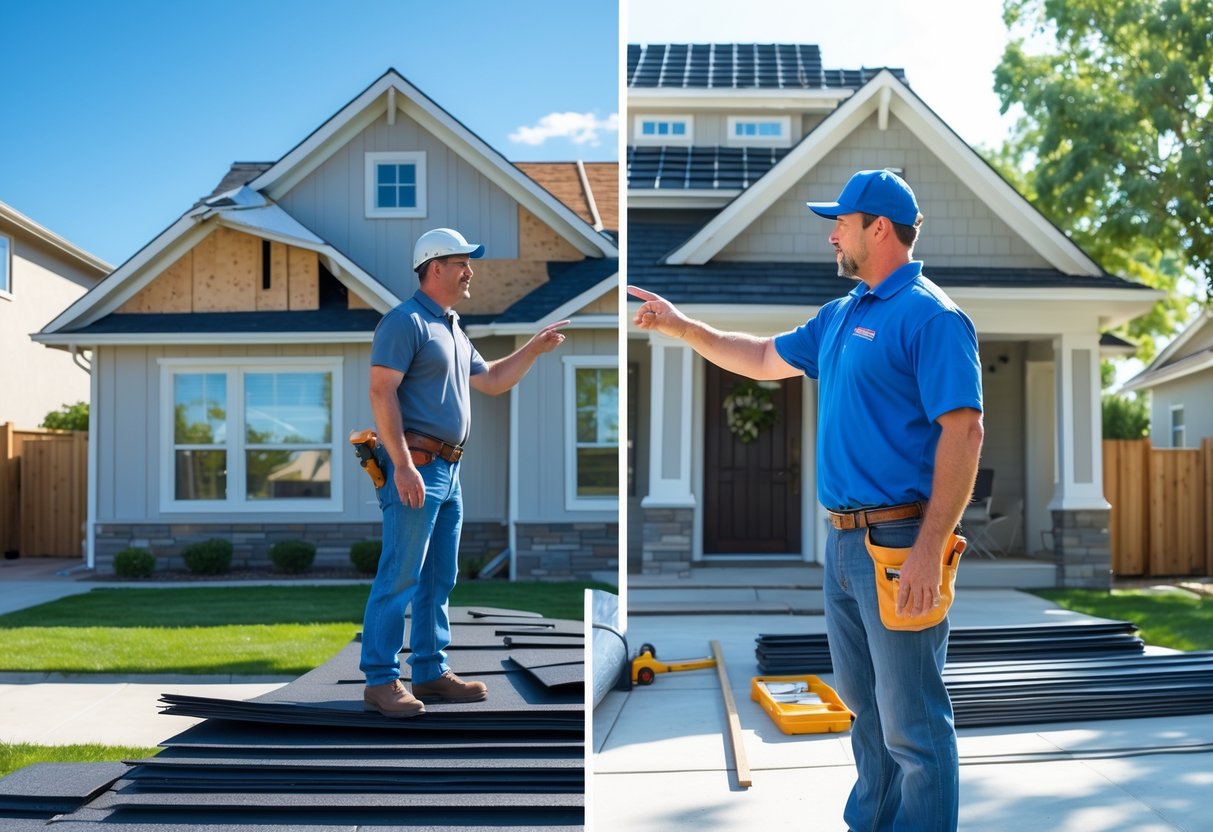
Reroofing, also called a roof overlay, can be a practical option when the existing roof is still in fair shape and the goal is to extend its life without the higher cost of a full tear-off. It works best under certain conditions and comes with both advantages and trade-offs that should be weighed carefully.
Ideal Conditions for Reroofing
Reroofing is only possible when the roof has a single layer of asphalt shingles. Building codes usually prohibit adding a third layer because of weight and safety concerns.
The current shingles must be mostly flat and intact. Curling, blistering, or widespread damage makes it unsafe to cover them. Moisture problems or soft spots in the roof deck also rule out this option.
It is best suited for homeowners who want a short-term solution or plan to replace the roof fully in a few years. In these cases, a roof overlay can provide protection at a lower upfront cost without major structural work.
Benefits of Reroofing
The main advantage is cost savings. Since contractors do not remove the old shingles, labor and disposal expenses are reduced. This can lower the overall project cost by 20–30% compared with a tear-off.
Installation is also faster. Crews can place new shingles directly over the old layer, which means less disruption and shorter project timelines.
Another benefit is reduced waste. Because the old roofing materials stay in place, fewer shingles end up in landfills. For homeowners concerned about environmental impact, this can be a meaningful factor.
Limitations and Risks of Reroofing
A roof overlay does not last as long as a full replacement. Heat can build up between layers, reducing ventilation and shortening the life of the new shingles.
Hidden problems remain unaddressed. If the roof deck has rot or if leaks exist under the old shingles, covering them only delays repairs and may increase future costs.
Resale value may also be affected. Some buyers and inspectors view multiple layers of shingles as a shortcut, which can raise concerns during a home sale.
Finally, reroofing only works with asphalt shingles. If the homeowner wants to switch to another roofing material, such as metal, a tear-off is required.
When a Tear-Off Makes More Sense
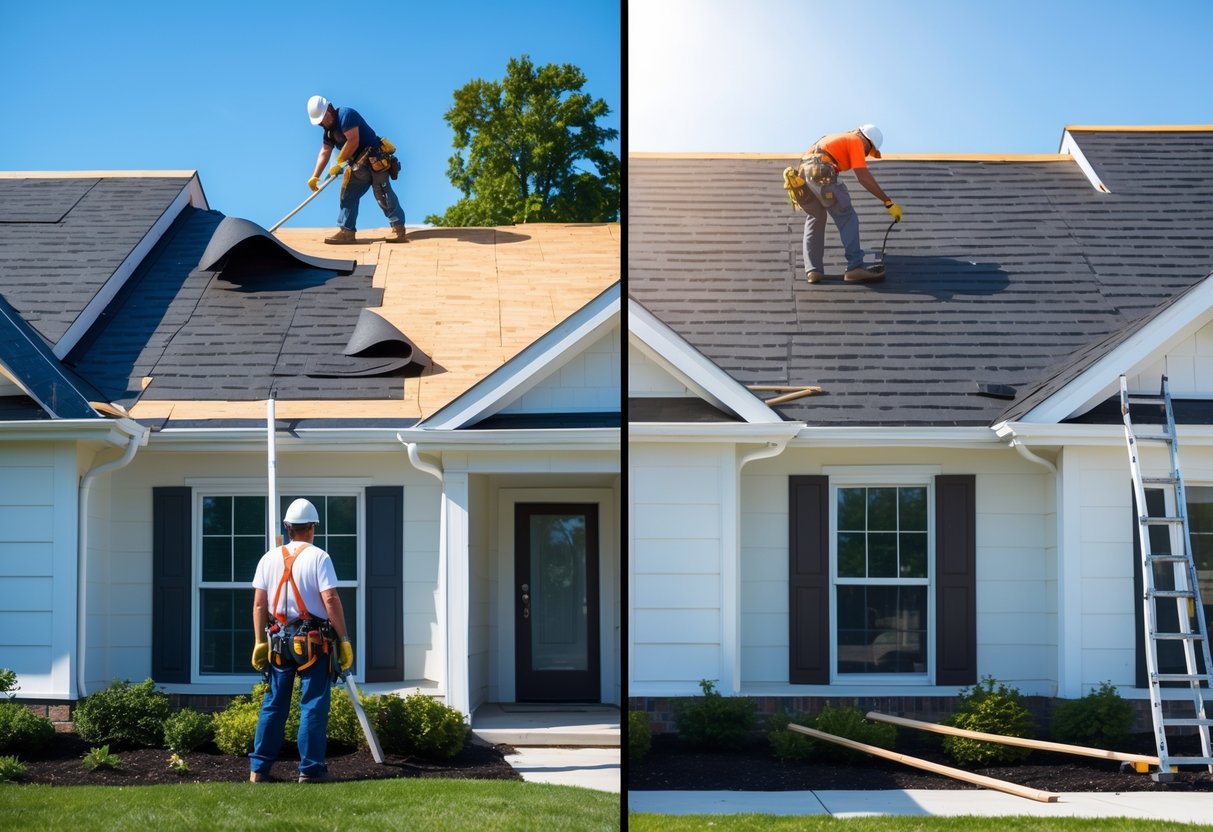
A full tear-off often becomes the better choice when the existing roof shows damage, has multiple layers, or when long-term durability is the priority. This method exposes the roof deck, allowing for a complete inspection and installation of new materials that perform more reliably than a simple overlay.
Signs a Tear-Off Is Necessary
A tear-off is usually required when the roof already has two layers of shingles. Most building codes do not allow a third layer because of added weight and safety concerns.
Leaks that appear in several areas also point to the need for removal. Covering damaged shingles without addressing the source of water intrusion can cause hidden rot and mold in the roof deck.
Other warning signs include sagging, soft spots, or visible structural issues. These problems can only be properly fixed once the old shingles and underlayment are stripped away.
Homeowners planning to stay in the property for 15–20 years often choose a tear-off. It provides a stronger foundation for new materials and avoids the risk of covering up existing weaknesses.
Advantages of a Full Tear-Off
Removing all old materials gives roofing contractors a clear view of the roof deck. This makes it possible to repair rot, warping, or other structural problems before installing new shingles.
Shingles installed on a clean deck last longer and resist wind uplift more effectively. This improves the overall lifespan of the roof replacement and reduces the chance of early failure.
A tear-off also allows for the installation of fresh underlayment and flashing. These components are critical for preventing leaks, especially around chimneys, valleys, and vents.
Many manufacturers provide stronger warranties when shingles are installed after a full tear-off. This can increase resale value since buyers often prefer a roof with a longer warranty and no hidden layers.
Potential Drawbacks of Tear-Off
The main disadvantage is cost. A tear-off involves more labor, new underlayment, and disposal fees for old shingles. Homeowners should expect a higher upfront price compared to reroofing.
The process also takes longer. Removing materials, inspecting the roof deck, and installing everything from scratch can extend the project timeline by several days.
There is also more disruption during the job. Noise, debris, and the need for cleanup may be inconvenient for those living in the home during the work.
Despite these drawbacks, many homeowners accept the added expense and time because the roof replacement provides a stronger foundation and longer service life.
Cost, Value, and Longevity Comparison
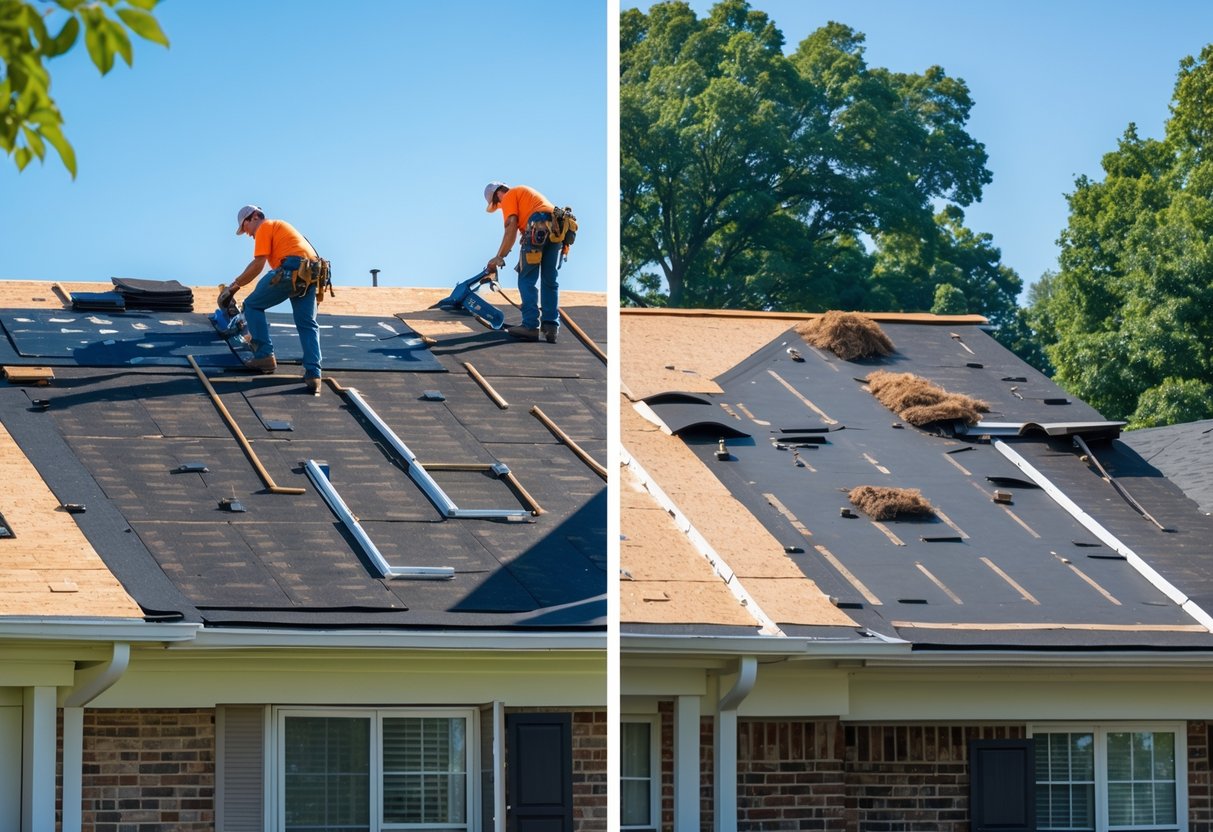
The choice between reroofing and a full tear-off often comes down to balancing short-term savings against long-term durability and home value. While reroofing typically offers lower upfront costs, a tear-off can extend roof lifespan, improve curb appeal, and increase resale value.
Upfront Costs of Reroof vs Tear-Off
Reroofing usually costs 20–30% less than a full tear-off. This is because contractors install new shingles directly over the old ones, cutting down on labor and disposal fees. For many homeowners, this can mean saving $1,000 or more on the project.
Tear-offs, on the other hand, involve stripping all old materials down to the deck. This process requires more time, labor, and equipment. Costs often range $300–$450 per square compared to $250–$350 per square for reroofing.
Additional expenses such as dumpster rentals, permits, and waste disposal add to the higher price of a tear-off. However, these costs also ensure hidden damage is addressed before the new roof is installed, which can help prevent future repair bills.
In short, reroofing is the cheaper way to replace your roof in the moment, but it comes with trade-offs that may show up later.
Long-Term Value and Return on Investment
A tear-off roof usually lasts 20–30 years, while a reroof averages closer to 15–16 years. This difference can nearly double the time before another replacement is needed.
Tear-offs also improve curb appeal because the roof surface looks more uniform without the uneven layers that can come with overlays. This cleaner look can boost resale value by $10,000 or more, making it attractive for homeowners planning to sell.
Manufacturers often provide stronger warranties on tear-off installations since all materials are new and installed to specification. Reroofs sometimes limit coverage because underlying issues remain hidden.
When factoring in lifespan, warranty protection, and added resale value, a tear-off often delivers a stronger return on investment, even though the upfront price is higher.
Material and Structural Considerations
The choice between reroofing and a tear-off often depends on how well new materials fit with the existing roof and whether the structure beneath can handle the changes. Material compatibility and the condition of the roof deck both play key roles in making the right decision.
Compatibility with Roofing Materials
Not all roofing materials work with a reroof. Asphalt shingles are the most common option for an overlay, but even then, building codes usually limit roofs to no more than two layers. Adding a third layer is often prohibited because of weight and safety concerns.
If a homeowner wants to switch to metal roofing or another heavier material, a tear-off becomes necessary. These materials need proper fastening to the roof deck, which is not possible if old shingles remain in place.
Another factor is underlayment. A reroof does not replace old underlayment, which may already be worn or damaged. With a tear-off, roofers can install new underlayment that improves moisture protection and ventilation.
In short, reroofing is only practical when using compatible asphalt shingles, while a tear-off allows for more flexibility in choosing different materials.
Impact on Roof Deck and Structure
The roof deck is the foundation of the entire roofing system. During a tear-off, roofers expose the deck and can check for soft spots, rot, or warping. This inspection ensures that any structural damage is repaired before new shingles or underlayment are installed.
With a reroof, the deck remains hidden. Problems like trapped moisture, mold, or sagging may go unnoticed until they worsen. This can shorten the lifespan of the new roofing layer and increase repair costs later.
Weight is another concern. Each additional layer of shingles adds load to the structure. Older homes or roofs with weaker framing may not safely support more than one layer. Local codes often reflect these limits to prevent long-term structural stress.
A tear-off provides the clearest view of the roof’s integrity and ensures the new system bonds directly to a sound deck, which improves both durability and performance.
Choosing the Right Approach for Your Roof
Selecting between a reroof and a tear-off depends on the roof’s condition, the homeowner’s budget, and long-term goals. The process often requires expert evaluation and a careful look at structural health, warranties, and code requirements.
Consulting a Roofing Company
A licensed roofing company plays a central role in determining whether to reroof or perform a tear-off. Professionals bring the tools and experience needed to assess roof layers, decking strength, and moisture issues that may not be visible from the surface.
Homeowners should request written estimates that clearly separate labor, materials, disposal, and warranty coverage. This makes it easier to compare bids and understand the real cost of roof replacement. Asking whether the contractor recycles shingles or follows local building codes can also prevent future problems.
It is also smart to confirm the company’s workmanship warranty and how it differs between reroofing and tear-off. Some contractors offer full coverage only with a complete tear-off because it allows proper installation of underlayment and flashing.
When choosing a roofing company, homeowners should:
- Verify licensing and insurance
- Ask for photos or reports from inspections
- Check references and past projects
- Clarify how many layers are currently on the roof
These steps help ensure the recommended approach is based on accurate inspection rather than cost alone.
Inspection and Decision Factors
A thorough inspection is the most important step before deciding how to replace your roof. Contractors often check for rot, water stains, loose decking, failing flashing, and ventilation issues. These conditions determine whether a reroof is safe or if a tear-off is required.
Building codes also influence the decision. Many areas allow only one additional roofing layer, and some require a tear-off if the roof already has two layers. Insurance carriers may also limit coverage for multiple-layer roofs.
Cost is another factor. A reroof usually costs less upfront because it avoids removal and disposal fees. However, it often shortens the roof’s lifespan and may reduce warranty coverage. A tear-off costs more but provides a clean deck, longer service life, and stronger warranty protection.
Homeowners planning to stay in their property long-term often choose a tear-off for maximum durability. Those preparing to sell soon may find a reroof acceptable if the existing roof is in good condition.
By weighing inspection results, code requirements, warranties, and long-term goals, homeowners can make a clear and informed choice for their roof replacement.
Frequently Asked Questions
Reroofing and tear-offs differ in process, cost, and long-term value. The choice depends on roof condition, material type, budget, and how long the owner plans to stay in the property.
What are the main differences between reroofing and a complete tear-off?
Reroofing adds a new layer of shingles over the existing roof. It is faster, less labor-intensive, and creates less waste.
A tear-off removes all old roofing materials down to the decking. This allows inspection of the underlying structure and provides a clean base for new materials.
How do I determine whether my roof needs reroofing or a complete tear-off?
A roof with only one existing shingle layer and no major damage may qualify for reroofing.
If the roof has leaks, sagging, multiple layers, or structural issues, a tear-off is usually required. A professional inspection helps confirm the right approach.
What are the cost implications of reroofing versus tearing off the existing roof?
Reroofing typically costs less because it avoids the labor of removing old shingles. It can save around 25%–30% of upfront expenses.
A tear-off costs more due to higher labor and disposal fees, but it often delivers better long-term value through longer lifespan and stronger warranties.
Can reroofing be done on any type of roofing material, or are there limitations?
Reroofing is most common with asphalt shingles. Some materials, such as metal or tile, usually require a full tear-off.
Building codes may also limit how many layers can be installed, which restricts reroofing in certain cases.
What are the potential risks or disadvantages of choosing reroofing over a tear-off?
Reroofing can trap hidden damage, such as rot or moisture, beneath the new layer. This may lead to more costly repairs later.
It can also reduce ventilation and shorten the roof’s lifespan compared to a full replacement.
How does the lifespan of a reroof compare to that of a new roof installed after a tear-off?
A reroofed system generally lasts fewer years than a roof installed after a tear-off. The extra layer can trap heat and limit airflow, which accelerates wear.
A new roof on a clean deck usually performs better, lasts longer, and qualifies for stronger manufacturer warranties.