

Santa Ana winds sweep through Southern California with dry air and powerful gusts that put serious stress on homes. Roofs often take the hardest hit, with shingles loosening, flashing bending, and leaks forming after repeated exposure. These winds can shorten a roof’s lifespan and create costly damage if not addressed with the right materials and maintenance.
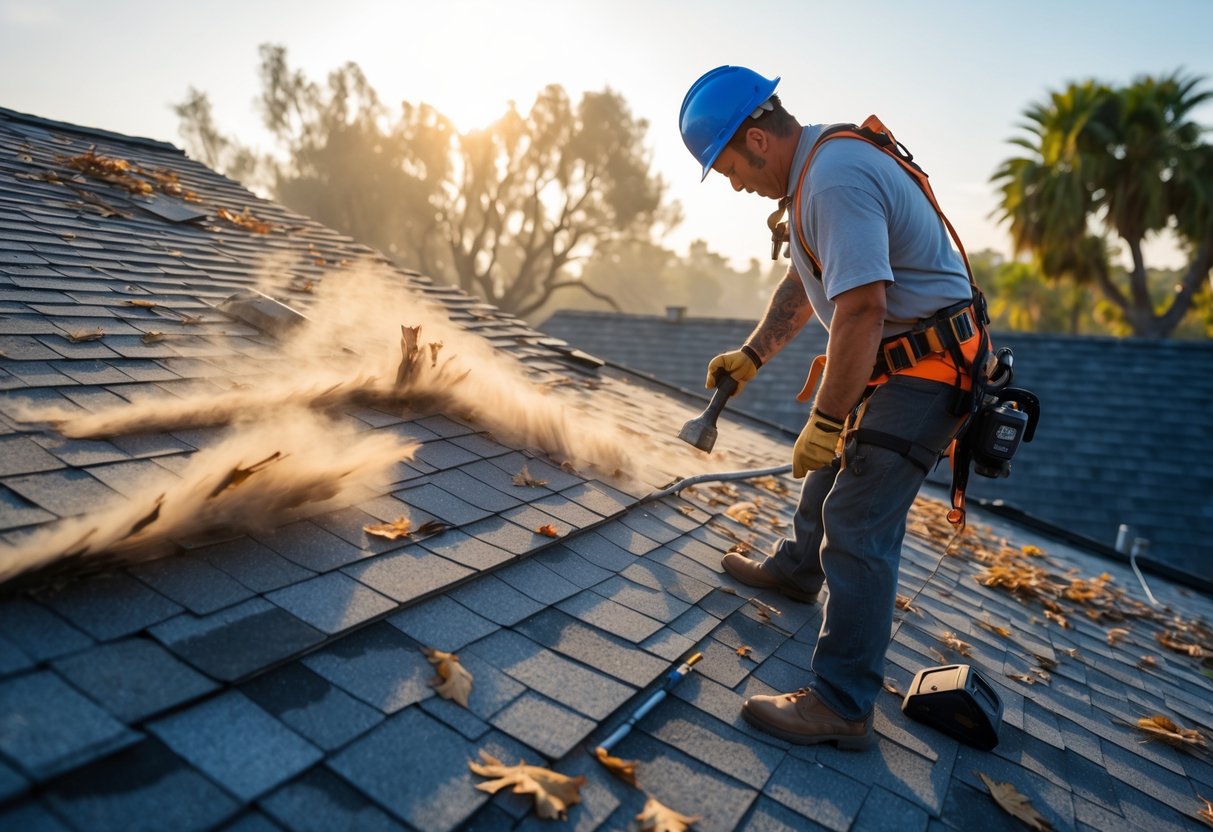
The combination of high speed, low humidity, and heat makes these winds especially tough on roofing systems. Asphalt shingles may curl or crack, while wooden materials can dry out and weaken. Over time, even small gaps allow water and debris inside, leading to bigger structural problems.
Protecting a roof in wind-prone areas requires planning and upkeep. Choosing durable, wind-resistant materials and scheduling regular inspections can make a big difference. With the right steps, a roof can withstand the challenges of Santa Ana winds and remain safe and reliable.
Key Takeaways
- Santa Ana winds put strong pressure on roofing materials.
- Roof damage risk rises with heat, dryness, and poor upkeep.
- Wind-resistant materials and regular maintenance reduce problems.
How Santa Ana Winds Impact Roofs
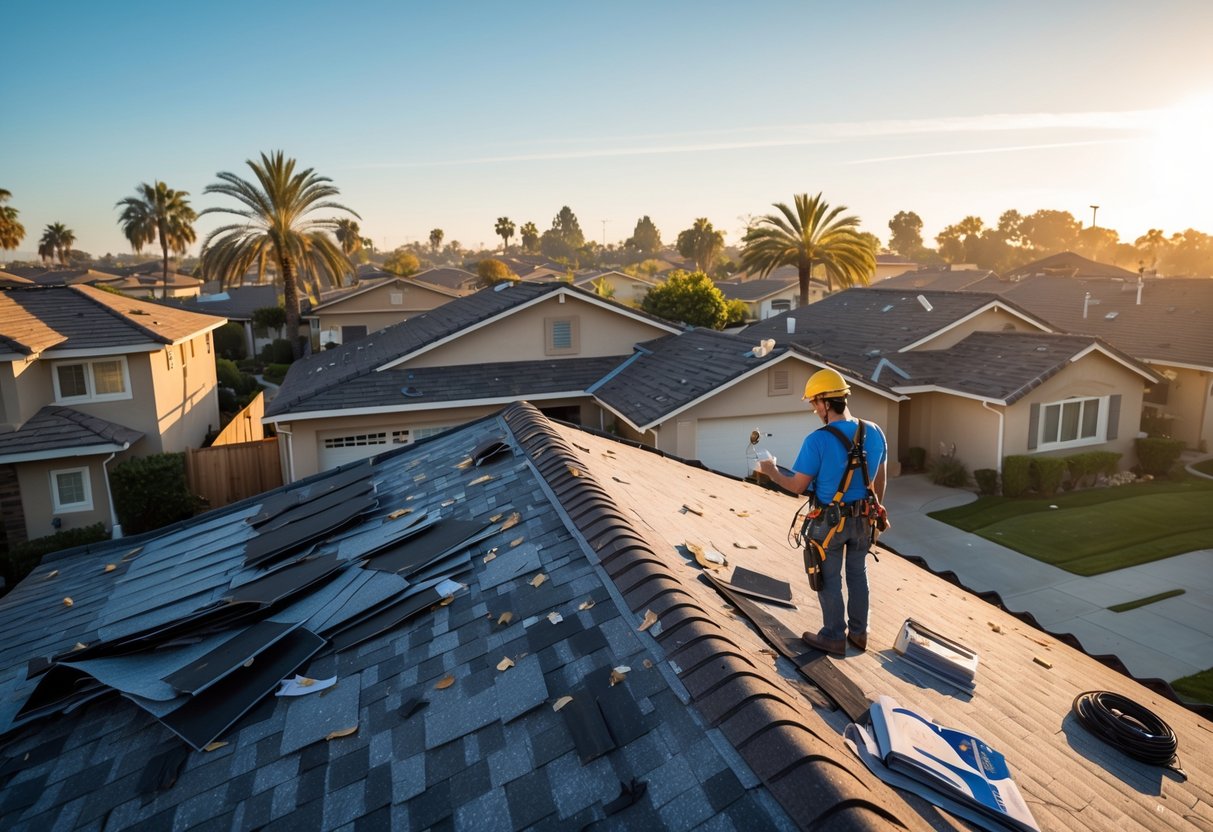
Santa Ana winds in Southern California bring hot, dry air and powerful gusts that place stress on homes. Roofs face the greatest exposure, with risks ranging from lifted shingles to structural damage and increased fire hazards.
Common Types of Roof Damage
Strong winds often loosen or tear away shingles, leaving gaps that allow water to enter during later rain. Asphalt shingles may blister or crack under the dry heat, while wooden shingles can shrink and curl.
Gutters and flashing also take damage. Loose gutters may detach under wind pressure, while flashing can bend or lift, exposing vulnerable seams.
Flying debris, such as branches, can puncture roofing surfaces. Even small impacts may create leaks that worsen over time. Regular inspections help catch these issues early.
Typical problems include:
- Shingle loss or curling
- Cracked or blistered surfaces
- Detached gutters or flashing
- Punctures from debris
Vulnerable Roofing Materials
Not all roofing materials hold up equally against Santa Ana winds. Wood shake shingles are particularly at risk because they dry out, split, and ignite more easily if embers land on them. Asphalt shingles, though common, may peel at the edges when wind gusts reach high speeds.
Lighter materials can lift more easily compared to heavier options like clay tiles or metal roofing. However, tiles can still crack if struck by falling branches.
Fire resistance also plays a role. Roofs rated Class A provide the best protection against wildfire embers carried by the winds. Homeowners with unrated or untreated wood roofs face much higher risk.
| Material Type | Wind Resistance | Fire Resistance |
|---|---|---|
| Wood Shake | Low | Low (unless treated) |
| Asphalt Shingles | Moderate | Moderate |
| Clay/Concrete Tile | High | High |
| Metal Roofing | High | High |
Structural Risks from Wind Gusts
When wind gusts exceed 60–80 mph, they create uplift forces that can strain a roof’s connection to the house. If the roof deck is not securely fastened, entire sections may lift.
Edges and corners face the most pressure. These areas often fail first, leading to progressive damage across the roof. Hurricane clips or straps help strengthen the connection between the roof and framing.
Large trees near homes also increase structural risks. Falling branches or trunks can puncture or collapse sections of the roof. Regular pruning and safe landscaping reduce this threat.
Even without falling objects, repeated high winds weaken fasteners and seals over time, making the roof more vulnerable with each storm season.
Factors That Increase Roof Vulnerability
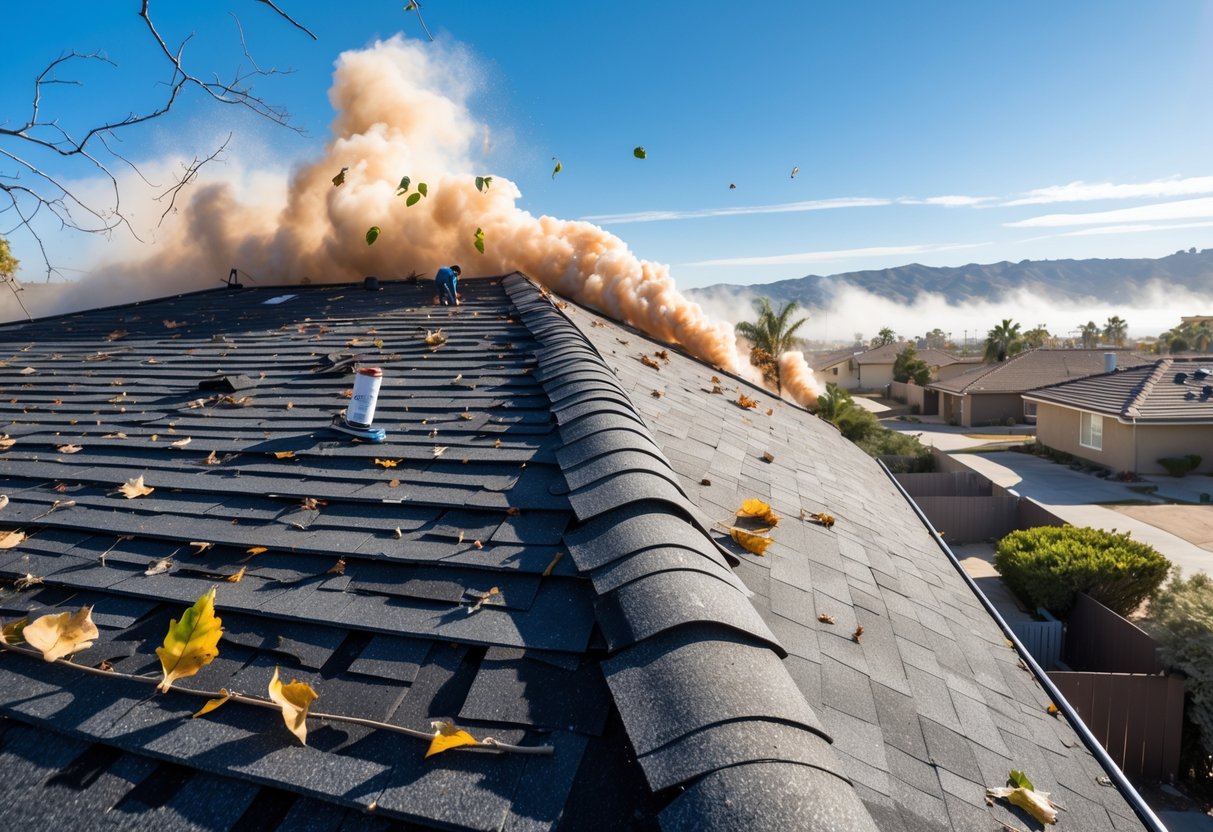
Roofs in Southern California face unique risks during Santa Ana wind events. The age of materials, their current condition, and the way a roof is designed all play a major role in how much damage it may sustain during extreme weather.
Age and Condition of Roofing
Older roofs are more likely to fail under strong winds. Shingles that have become brittle, curled, or cracked can be lifted more easily, exposing the underlayment and creating entry points for water. Even small weaknesses can expand quickly during a high-wind event.
In Southern California, many homes experience long periods of sun exposure followed by sudden dry winds. This combination accelerates wear on asphalt shingles, wood shakes, and even tile underlayment. A roof past 15–20 years without major maintenance is at higher risk of leaks and material loss.
Regular inspections help identify problems before they worsen. Signs such as missing shingles, loose flashing, or sagging areas should be taken seriously. Addressing these issues early reduces the chance of widespread damage during Santa Ana winds or other extreme weather conditions.
Design and Slope Considerations
The shape and slope of a roof affect how winds interact with it. Steeper slopes often shed wind more effectively, while flat or low-pitch roofs may experience greater uplift forces. Areas near ridges, eaves, and corners are especially prone to pressure imbalances.
In neighborhoods exposed to seasonal wind events, homes with complex rooflines—such as multiple valleys or dormers—face more stress points. These designs create turbulence that can loosen shingles and flashing.
Materials also matter. Lightweight shingles on a low-slope roof are more vulnerable than heavier tiles or metal panels on a properly angled surface. Reinforcing trusses, securing edges, and choosing wind-rated materials can reduce risks.
A careful review of roof design during construction or replacement helps limit long-term exposure to wind damage in Southern California’s climate.
Santa Ana Winds, Fire Risk, and Roof Safety
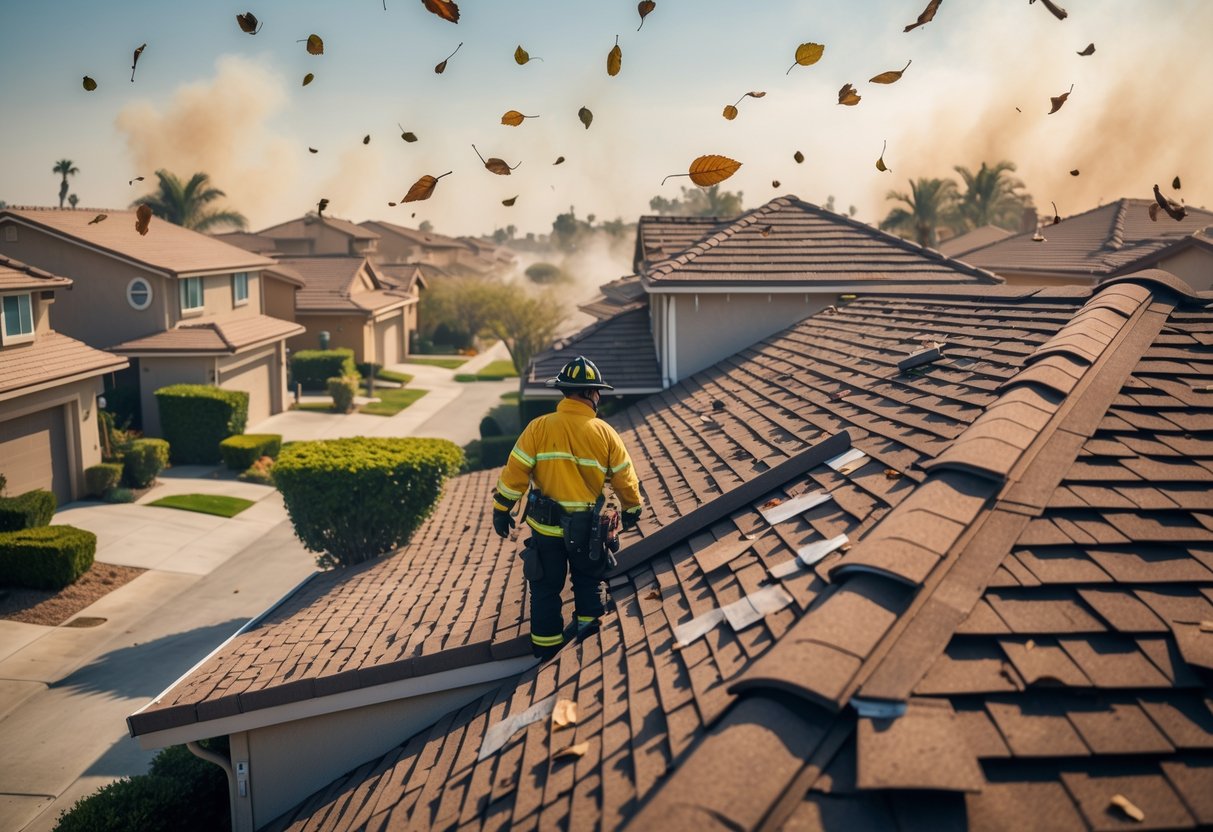
High winds in Southern California not only damage roofs directly but also increase the chance of fire spreading to homes. Dry air, fast-moving gusts, and sparks from power lines or nearby vegetation make roofs especially vulnerable during fire season.
Wildfires and Roof Ignition
Santa Ana winds dry out vegetation, making it more likely to ignite. Once a wildfire starts, embers can travel far and land on rooftops. Roofs built with wood shakes or untreated shingles face higher ignition risk compared to non-combustible materials like metal or tile.
Embers often settle in roof valleys, gutters, or under overhangs. If leaves or pine needles collect in these spots, they provide fuel for ignition. Cleaning gutters and removing debris reduces this hazard.
Roof design also matters. Complex rooflines with multiple ridges and valleys give embers more places to lodge. Homeowners can lower risk by installing ember-resistant vents and using Class A fire-rated roofing materials. These steps limit the chance of small sparks turning into structural fires.
Red Flag Warnings and Fire Season
Weather services issue Red Flag Warnings when conditions favor fast fire spread. These alerts often occur in late summer through fall, when Santa Ana winds peak. During these times, roofs face higher exposure to airborne embers and falling branches.
Residents should treat these warnings as signals to prepare. Simple actions include:
- Securing outdoor furniture and equipment
- Checking that roof shingles or tiles are firmly attached
- Storing flammable items, like firewood, away from the home
Because fire season brings repeated wind events, roofs must withstand not just one storm but weeks of stress. Regular inspections during this period help identify loose materials that could fail under strong gusts or heat.
Role of Power Lines in Fire Threat
Downed power lines are a major ignition source during Santa Ana wind events. Strong gusts can knock lines into dry brush or cause sparks that ignite fires. Once a fire starts, embers carried by the wind can reach rooftops miles away.
Some utility companies now shut off electricity during extreme wind forecasts to reduce this risk. While inconvenient, these public safety power shutoffs help prevent widespread fires.
Homeowners near overhead lines face added roof risks. Falling branches can bring wires down onto houses, damaging shingles and creating fire hazards. Trimming nearby trees and reinforcing roof structures reduces the chance of both impact damage and ignition.
Environmental and Climatic Impacts on Roofs
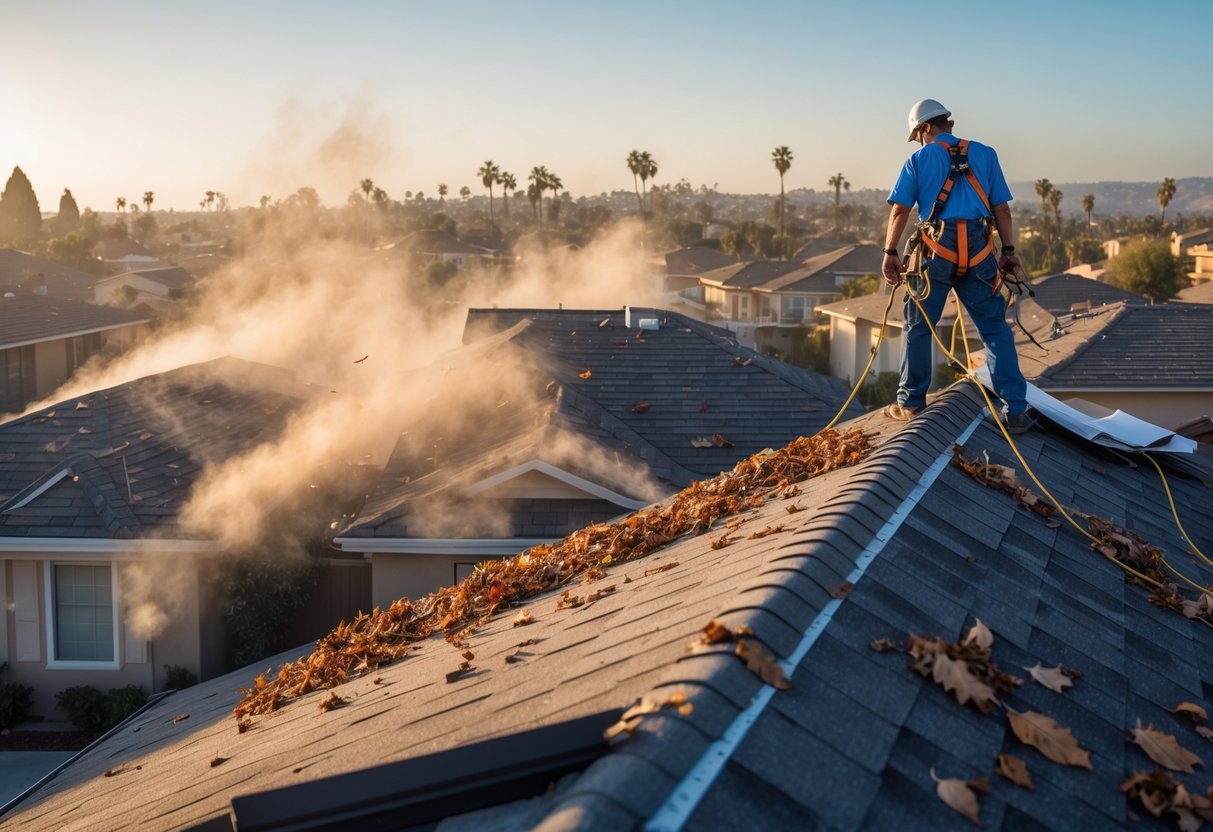
Roofs in Southern California face unique stress due to dry winds, poor air quality, and long-term climate shifts. Each factor weakens materials in different ways, leading to higher maintenance needs and shorter roof lifespans.
Dry Winds and Moisture Loss
Santa Ana winds originate in the Great Basin and sweep into Southern California with very low humidity. These dry winds strip away moisture from roofing materials, especially wood shingles, causing them to shrink, crack, or curl. Asphalt shingles may blister or lose protective granules when exposed to repeated drying cycles.
Moisture loss also affects roof sealants and adhesives. Materials that rely on flexibility can become brittle, leading to gaps where water or debris may enter. This creates long-term vulnerabilities even if no immediate damage is visible.
Homeowners often need to inspect for early signs of cracking during and after wind events. In some cases, switching to lighter-colored or reflective roofing materials can reduce heat absorption, slowing down the drying effect. Routine sealing and surface treatments also help limit moisture loss.
Pollution and Air Quality Effects
Santa Ana winds carry fine dust, soot, and urban pollutants across long distances. These particles settle on roofs, clog gutters, and stain surfaces. Over time, buildup can trap heat and moisture against roofing materials, accelerating wear.
Pollution also affects drainage systems. Gutters filled with dust and debris increase the risk of water pooling after rain, which can damage shingles, flashing, and underlayment. Regular cleaning is one of the most effective ways to reduce this risk.
In areas closer to freeways or industrial zones, chemical pollutants may interact with roofing materials. For example, acidic particles can weaken protective coatings on metal roofs. Scheduled maintenance and rinsing with clean water can help limit the impact of airborne contaminants.
Influence of Climate Change
Climate change is expected to intensify the conditions that make Santa Ana winds damaging. Warmer temperatures and prolonged droughts reduce natural moisture in the region, making roofing materials more prone to drying and cracking.
In addition, hotter summers increase thermal stress. Roofs expand and contract more often, which weakens joints and fasteners over time. Combined with stronger wind events, this creates higher repair demands.
Shifts in rainfall patterns also matter. Sudden storms following dry, windy periods can exploit small cracks or gaps created by moisture loss. This leads to leaks and structural problems that may not appear until months later.
Many homeowners now consider fire-resistant and climate-adapted roofing materials. Options such as composite shingles, metal systems, or treated wood products offer better resistance to both wind and heat. Investing in these upgrades reduces long-term costs as weather extremes continue to evolve.
Prevention and Mitigation Strategies
Protecting a roof from Santa Ana wind events requires steady upkeep, stronger materials, and clear steps to follow before and during a red flag warning. Small actions taken early often prevent costly damage later.
Inspection and Maintenance Best Practices
Regular inspections help identify weak spots before high winds expose them. Missing or loose shingles, cracked tiles, and gaps around vents or flashing are common entry points for damage. Even small openings can lead to leaks when gusts push debris and moisture under the roofing surface.
Homeowners should schedule professional roof inspections at least twice a year—once in spring and once in fall. Inspections after a major wind event are also important, since damage may not be visible from the ground.
Routine maintenance includes:
- Clearing gutters and roof valleys of leaves and debris.
- Trimming tree branches that hang over the roof.
- Checking attic spaces for water stains or light penetration.
These steps reduce the risk of shingles lifting and prevent water intrusion during Santa Ana winds.
Upgrading Roofing Materials
Some roofing materials perform better under strong winds than others. Metal roofing, slate, and high-quality asphalt shingles have higher wind resistance ratings compared to standard shingles. Materials with heavier weight and secure fastening systems are less likely to peel away during gusts.
Upgrades often include reinforced underlayment, additional fasteners, or adhesives that help keep shingles in place. Roof-to-wall connections can also be strengthened with hurricane straps or clips, which reduce the chance of roof sections detaching.
For homes in areas frequently impacted by Santa Ana winds, investing in Class F or Class H wind-rated shingles can provide extra protection. Though upfront costs are higher, these materials often lower repair expenses over time.
Emergency Preparation for Wind Events
When a red flag warning is issued, preparation can limit immediate risks. Securing outdoor furniture, trimming loose branches, and covering vulnerable roof sections with tarps are simple but effective steps.
Homeowners should keep an emergency kit with tarps, nails, and basic tools to make temporary repairs if shingles blow off. Quick action prevents further water damage until a professional can respond.
Insurance documentation is also important. Taking photos of the roof before and after a wind event helps with claims and speeds up repair approvals. Having a trusted roofing contractor on call ensures faster service after widespread damage occurs.
Frequently Asked Questions
Santa Ana winds can loosen shingles, break tiles, and push debris into weak spots on a roof. Homeowners in affected regions benefit from preventive steps, proper materials, and timely inspections to limit costly repairs.
What types of damage can the Santa Ana winds cause to roofing structures?
These winds can lift or tear off shingles and tiles. They may bend or detach flashing around chimneys and vents. Flying debris can also puncture or crack roofing materials, leaving openings for water leaks.
How can homeowners prepare their roofs to withstand the Santa Ana winds?
They can secure loose shingles and ensure flashing is tightly fastened. Cleaning gutters and drains helps prevent water buildup if rain follows the winds. Regular maintenance before wind season reduces the chance of sudden failures.
What are the signs that a roof has been damaged by the Santa Ana winds?
Missing or curled shingles, cracked tiles, and damaged flashing are common signs. Water stains on ceilings or in the attic can signal leaks. Debris scattered on the roof or ground may also indicate damage.
What materials are recommended for roofing in areas prone to Santa Ana winds?
Impact-resistant shingles and metal roofing provide strong wind resistance. Materials with higher wind ratings are preferred in these regions. Lighter-colored options can also reduce heat stress on the roof during dry, warm conditions.
How often should roofs be inspected in regions affected by Santa Ana winds?
At least two inspections per year are recommended. Additional checks after major wind events help identify hidden issues early. Professional assessments ensure repairs are made before problems become severe.
What are the best immediate actions to take if a roof is damaged during a Santa Ana wind event?
Stay off the roof during high winds for safety. Document visible damage with photos and contact a licensed roofing contractor as soon as possible. Temporary coverings, like tarps, may reduce water intrusion until repairs are completed.