

Commercial roof leaks can cause more than just a few water spots on the ceiling. They often lead to damaged equipment, safety hazards, and costly repairs that disrupt daily operations. The top causes of commercial roof leaks usually come down to poor installation, aging materials, drainage problems, or damaged flashing and sealants—and each has a clear fix if caught early.
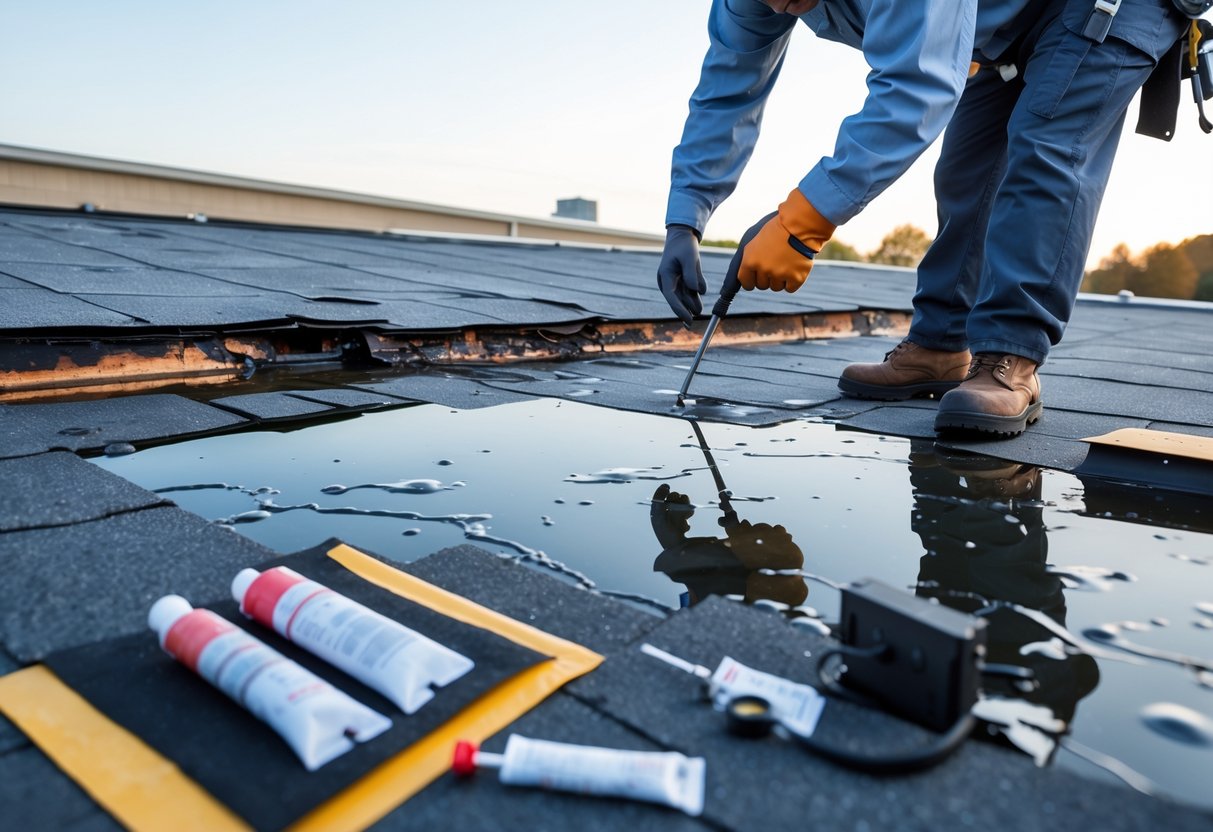
By understanding what leads to leaks and how to address them, property owners can avoid expensive surprises. Simple steps like regular inspections, keeping drainage systems clear, and repairing small issues before they spread can extend the life of a roof and prevent major disruptions.
Key Takeaways
- Commercial roof leaks often start from preventable issues
- Early detection and repair reduce long-term costs
- Routine maintenance helps stop leaks before they begin
Major Causes of Commercial Roof Leaks
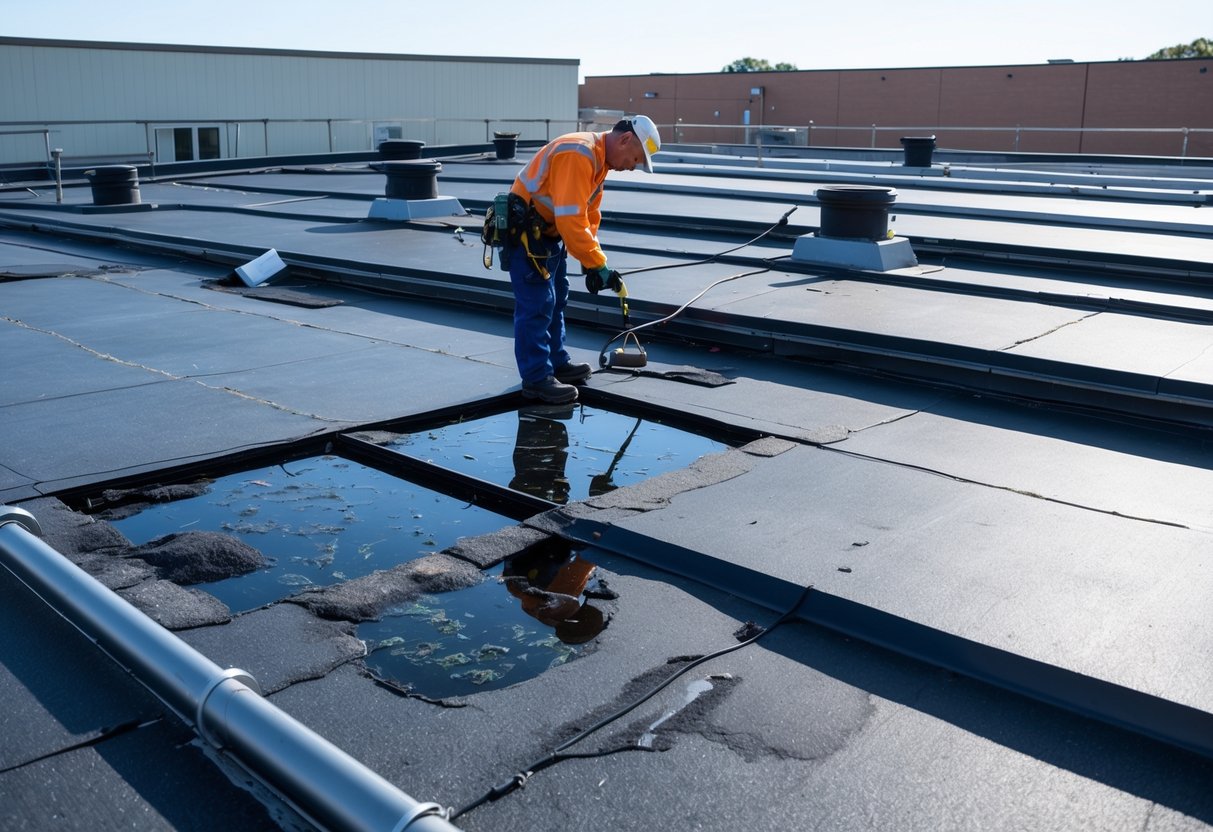
Commercial roof leaks often come from issues that develop slowly over time or from preventable mistakes during construction. Problems with roofing materials, installation quality, and exposure to harsh weather play the biggest role in whether a roof stays watertight or begins to fail.
Aging Roofing Materials
As roofing materials age, they lose flexibility and strength. Membranes can crack, shrink, or separate at seams, which allows water to seep through. This is one of the most common causes of commercial roof leaks in older buildings.
Flat roofs with single-ply membranes, such as EPDM or TPO, often show wear after years of UV exposure. The sun dries out the material, making it brittle. Asphalt-based systems may blister or split, which weakens their ability to repel water.
Drainage systems also become less effective as roofing materials warp or settle. Ponding water speeds up deterioration, creating soft spots that eventually fail. Regular inspections help identify these weak areas before leaks spread into the building.
Key signs of aging roofing materials include:
- Discoloration or fading
- Cracks or splits in the membrane
- Loose seams or flashing
- Soft or spongy areas underfoot
Poor Installation
Even new roofing materials can fail if they are installed incorrectly. Poor workmanship is a leading cause of roof leaks in commercial buildings. Mistakes during installation often show up within the first few years.
Improperly sealed seams, uneven insulation, or poorly attached flashing create gaps where water can enter. If drainage is not planned correctly, water may pool on the roof and put stress on weak points.
Another common issue is using the wrong type of fasteners or adhesives for the roofing system. This can cause sections of the roof to lift or separate during normal weather conditions.
Examples of installation errors that lead to roof leaks:
- Misaligned or loose flashing
- Insufficient overlap on membrane seams
- Inconsistent insulation thickness
- Blocked or poorly designed drains
Weather Damage
Severe weather puts constant stress on commercial roofing. Heavy rain, hail, snow, and strong winds all increase the risk of roof damage and leaks. While roofs are built to handle normal conditions, extreme events often expose weak areas.
Hail can puncture membranes and leave small holes that grow over time. Wind may lift flashing or peel back sections of the roof if edges are not secured. Ice dams form in cold climates, forcing water under roofing materials and into the building.
Temperature swings also speed up wear. Roofing materials expand in heat and contract in cold, which causes seams to pull apart. Over time, this movement creates gaps that allow water intrusion.
Weather-related risks include:
- Punctures from hail or debris
- Wind uplift along roof edges
- Ice dams blocking drainage
- Thermal expansion and contraction stresses
Drainage Issues and Water Accumulation
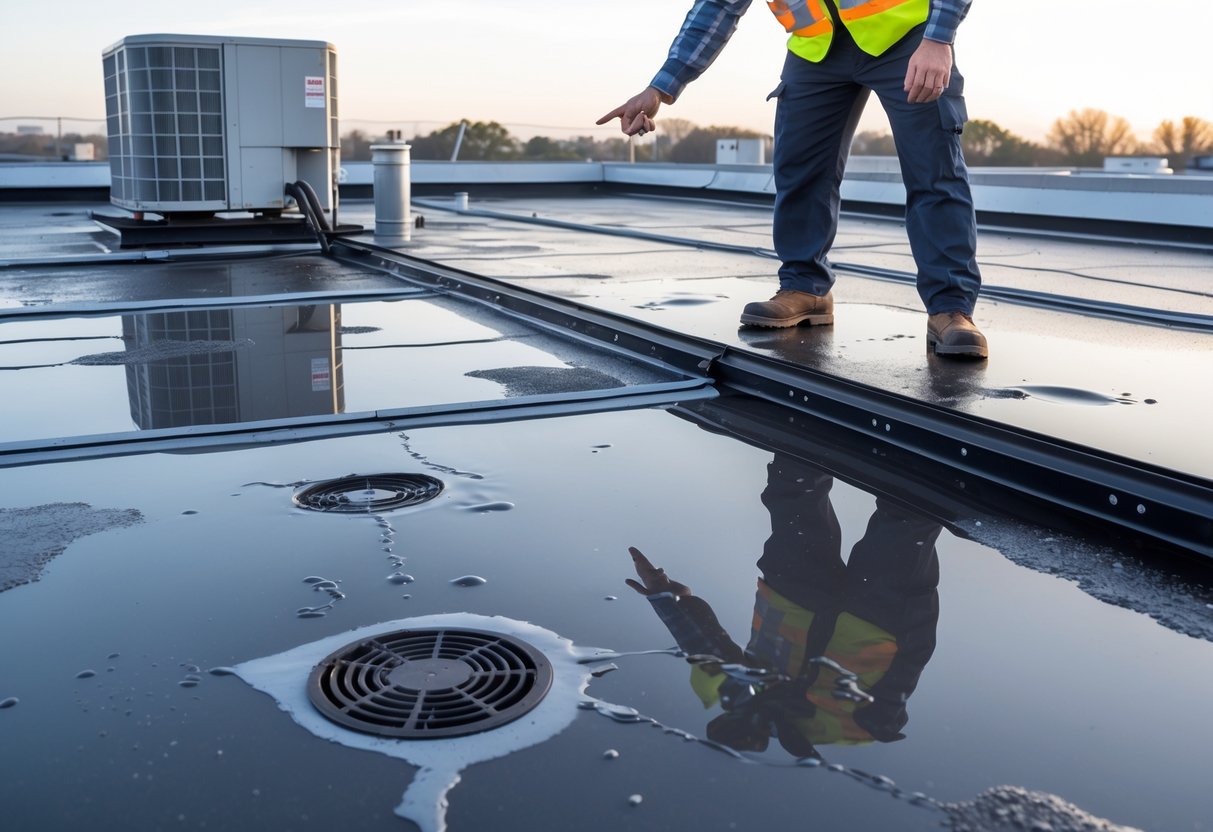
Water that does not drain properly from a commercial roof can shorten the roof’s lifespan and increase the risk of leaks. Standing water, poor slope design, and clogged drainage paths often lead to structural wear, roof damage, and costly repairs.
Ponding Water on Flat Roofs
Flat roofs often develop low spots where water collects after rain. This condition, known as ponding water, increases stress on roofing materials and weakens seams. Over time, the extra weight and moisture can cause cracks, leaks, and deterioration of insulation.
Water that remains for more than 48 hours is a clear sign of poor drainage. Property managers should monitor these areas closely, especially after storms.
Key risks of ponding water include:
- Faster breakdown of roofing membranes
- Increased chance of roof leaks
- Added structural load on the roof deck
Fixes often involve re-sloping the roof with tapered insulation or improving the drainage layout. Regular inspections help detect low spots early before major roof damage occurs.
Poor Drainage Systems
A drainage system that is not designed or maintained properly often causes water accumulation. Inadequate slope, undersized drains, or poorly placed scuppers prevent water from flowing off the roof efficiently.
When water lingers, it seeps into seams and penetrations, leading to roof leaks. Poor drainage also accelerates wear on flashing and sealants.
Signs of a failing drainage system:
- Water stains on ceilings inside the building
- Overflowing roof edges during heavy rain
- Persistent damp areas near drains
Solutions may include adding more drains, adjusting the slope, or installing larger scuppers. Routine maintenance ensures that the system continues to handle seasonal weather without causing roof damage.
Clogged Gutters and Downspouts
Gutters and downspouts guide water away from the roof and building. When they clog with leaves, dirt, or debris, water backs up and pools on the roof surface. This often leads to leaks at seams and damage along the roof edge.
Clogging also increases the risk of ice dams in colder climates. Overflowing gutters may stain walls, erode landscaping, and weaken the roof structure.
Prevention methods include:
- Installing gutter guards to block debris
- Cleaning gutters and downspouts at least twice a year
- Inspecting after storms for blockages
By keeping water flowing freely, property owners reduce the risk of roof leaks and extend the service life of the roofing system.
Flashing and Sealant Failures
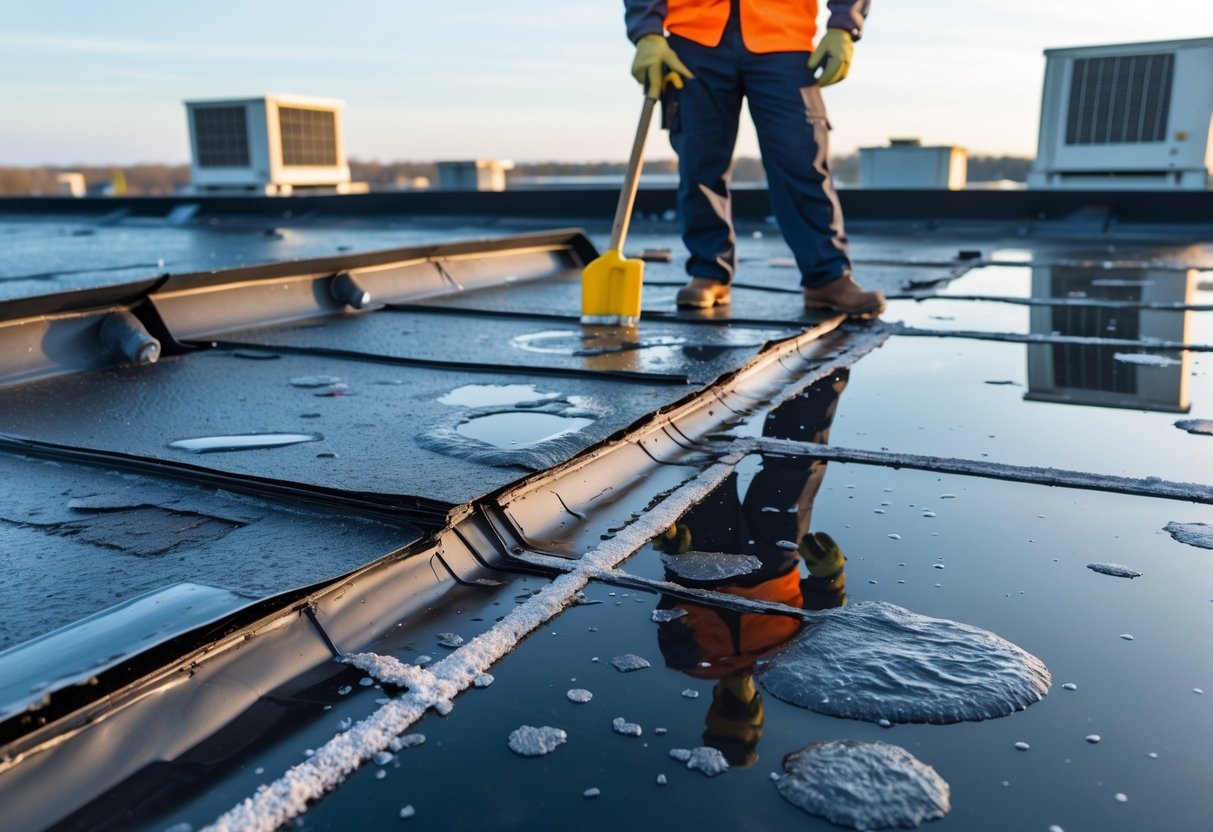
Water often enters a commercial roof through weak points around joints, penetrations, or edges. When flashing or sealants fail, these vulnerable spots lose their protection and allow leaks to form, even if the rest of the roof system is in good condition.
Worn-Out Flashing
Flashing directs water away from critical areas such as HVAC curbs, skylights, vents, and wall intersections. When it corrodes, cracks, or pulls away from the roof surface, water can bypass the barrier and seep into the building.
In coastal areas, salt air and humidity speed up corrosion. Temperature swings also cause metal flashing to expand and contract, which loosens fasteners and creates gaps. Poor installation, such as misaligned seams or thin metal, further shortens its lifespan.
Signs of flashing failure include:
- Rust or corrosion on metal edges
- Visible gaps between flashing and roofing materials
- Water stains near penetrations or walls
Repairs often involve resealing joints, reinforcing weak sections, or installing new flashing. In some cases, contractors add counter-flashing or use thicker metal for longer durability. Using commercial-grade materials ensures better resistance to weather and reduces recurring roof leaks.
Degraded Sealants
Sealants are used around penetrations, seams, and rooftop equipment to close small gaps. Over time, they dry out, shrink, or lose adhesion, especially when exposed to UV rays and standing water. Once cracks appear, water can travel beneath the roof membrane and cause hidden damage.
Movement from HVAC vibrations or building shifts also stresses sealant joints. Even a small breach can let water spread under insulation or decking before a leak becomes visible inside.
Common repair steps include:
- Removing failed sealants completely
- Applying new high-performance sealants
- Adding protective roof coating to extend service life
Regular inspection of sealant lines helps prevent leaks from developing into larger structural problems. Using the right type of sealant for each penetration improves long-term performance and reduces maintenance costs.
Identifying and Inspecting Roof Leaks
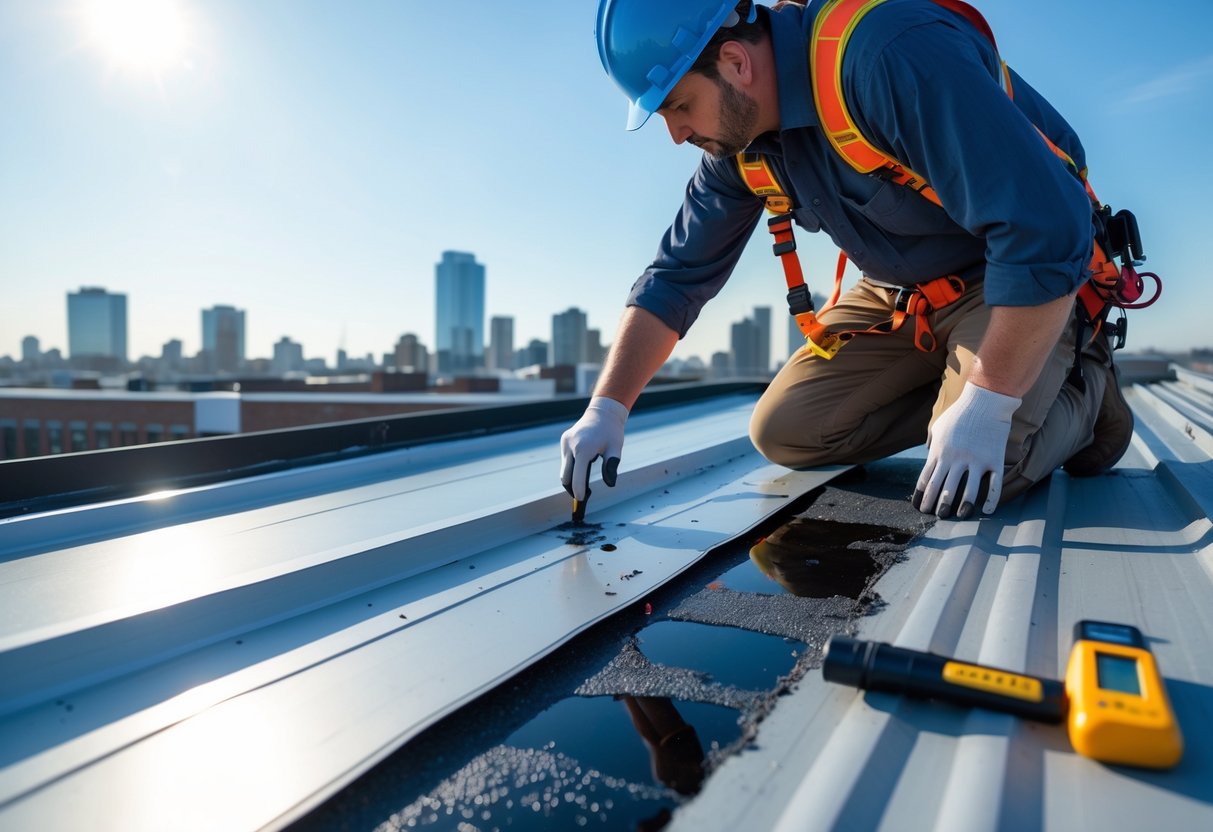
Detecting roof leaks early reduces repair costs and prevents structural damage. Knowing the warning signs and using qualified roofing contractors for inspections ensures problems are found and fixed before they spread.
Common Signs of Roof Leaks
Visible water stains on ceilings or walls often point to a leak. These stains may appear as yellow or brown patches that gradually spread. Damp spots or bubbling paint are also common indicators.
Pooling water on flat roof surfaces is another clear warning. Standing water can cause blistering in the roof membrane and speed up deterioration. Clogged gutters or downspouts often contribute to this issue.
Other signs include:
- Musty odors inside the building
- Mold growth on walls or ceilings
- Loose or damaged flashing around vents or skylights
Even small leaks can cause structural weakening over time. Regular roof inspections help identify these problems before they lead to major repairs.
Professional Roof Inspections
A roofing professional uses tools and experience to locate hidden leaks that are not obvious from the ground. They check flashing, seams, drainage systems, and membrane surfaces for cracks or gaps.
Roofing contractors often perform moisture scans or infrared surveys to detect water beneath the surface. This helps confirm the exact source of a leak instead of only treating visible damage.
During a roof inspection, they also assess:
- Condition of gutters and downspouts
- Integrity of sealants and joints
- Signs of ponding water or sagging areas
Hiring a qualified contractor ensures the inspection is thorough and accurate. This approach prevents recurring leaks and extends the lifespan of the roofing system.
Effective Roof Leak Repairs and Solutions
Addressing a commercial roof leak requires both short-term actions to limit damage and long-term solutions that restore the roof’s integrity. The right approach depends on the severity of the leak, the roof type, and the expertise of the roofing contractor handling the repair.
Temporary Leak Fixes
Temporary fixes help control water intrusion until a permanent roof repair can be scheduled. These solutions are not designed to last but can prevent further damage to the building’s structure and contents.
Common stopgap measures include roof tarps, sealant applications, and patch membranes. A tarp can be secured over the damaged area to divert water. Sealants or roof cement may be applied around small punctures or flashing gaps to slow leaks.
In some cases, roofing tape or peel-and-stick patches work well for rubber or single-ply membranes. These create a quick waterproof barrier but should be checked often because they can loosen under heavy rain or temperature changes.
Temporary repairs are especially important during storms when professional help may not be immediately available. They protect equipment, inventory, and interior finishes from costly water damage while buying time for a proper commercial roof leak repair.
Permanent Repair Methods
Permanent solutions address the root cause of the leak and restore the roof’s performance. The method depends on the roof system, the leak location, and the overall condition of the materials.
For flat roofs like TPO, EPDM, or PVC, roofing contractors often heat-weld or adhere compatible patches and seal them with liquid membranes. Built-up roofing may require removing gravel, applying bitumen patches, and reinforcing with fiberglass mesh before re-covering with gravel.
Metal roof leak repair often involves replacing corroded fasteners, sealing seams with flexible sealants, or installing new panels in severely damaged areas. Rusted sections may be treated with primers and coatings to extend service life.
When the roof membrane shows widespread aging or shrinkage, contractors may recommend roof coatings or partial replacement. Coatings such as elastomeric or silicone can extend a roof’s lifespan by improving waterproofing and UV resistance.
Choosing the Right Roofing Contractor
Selecting a qualified roofing contractor is critical for lasting repairs. Commercial roof leak repair requires specialized skills, tools, and knowledge of different roofing systems.
A reliable contractor should provide detailed inspections, written estimates, and clear repair plans. They should also explain whether the work falls under warranty coverage or if replacement is a better long-term option.
Experience with specific roof types matters. For example, a contractor familiar with EPDM systems will know the correct primers and seam tapes to use, while metal roof specialists understand fastener replacement and panel alignment.
Business owners should also verify licenses, insurance, and safety practices. Checking references and past project photos helps confirm workmanship quality. Choosing the right professional ensures that roof repairs are effective, compliant with building codes, and minimize disruption to daily operations.
Preventative Maintenance to Avoid Future Leaks
Preventative maintenance reduces the risk of costly roof repairs and extends the lifespan of commercial roofing systems. By focusing on consistent upkeep, protective coatings, and expert inspections, building owners can address small issues before they turn into major leaks.
Routine Maintenance Practices
Routine care helps keep commercial roofs in reliable condition. Simple steps like clearing debris, unclogging drains, and trimming nearby trees prevent water from pooling and damaging the roof surface. Standing water is one of the most common causes of leaks on flat roofs, and removing blockages ensures proper drainage.
Regular checks should also focus on flashing, seams, and fasteners, since these areas often fail first. Replacing loose or missing components quickly prevents water intrusion.
It is also important to repair punctures or tears in membranes early. Even small openings can let in moisture that leads to mold or structural damage.
Keeping accurate maintenance records adds value as well. A written history of inspections and repairs helps track roof health and provides documentation for warranty claims if problems arise.
Importance of Roof Coatings
Roof coatings add a protective layer that shields surfaces from UV damage, water intrusion, and normal wear. They are especially effective for flat, metal, and TPO roofing systems, which often face issues like seam separation, corrosion, or surface cracking.
Applying reflective coatings can also reduce heat absorption. This lowers cooling costs and slows down material breakdown from high temperatures. For metal roofs, anti-corrosive finishes extend service life by protecting fasteners and seams.
Coatings should be reapplied every few years, depending on the product and roof type. Skipping this step shortens the roof’s lifespan and increases the likelihood of leaks.
When applied correctly by a roofing professional, coatings serve as both a preventive measure and a cost-saving investment. They delay the need for major repairs or full replacements.
Scheduled Professional Inspections
Professional inspections catch problems that building staff may overlook. Roofing professionals are trained to identify early signs of damage, such as seam separation, flashing deterioration, or weak spots around rooftop equipment.
Inspections should take place at least twice a year, ideally in the spring and fall. Extra inspections are recommended after severe weather events that could cause hidden damage.
During these visits, professionals check drainage systems, sealants, and the condition of membranes or panels. They also assess areas around HVAC units, vents, and skylights, which are common leak points.
A consistent inspection schedule ensures that small issues are repaired before they escalate. This proactive approach reduces emergency repair costs and helps extend the overall life of the roof.
Frequently Asked Questions
Commercial roof leaks often result from issues such as aging materials, poor installation, and exposure to harsh weather. Regular inspections, proper maintenance, and timely repairs play an important role in reducing risks and protecting the building structure.
What are the common factors that lead to commercial roof leaks?
Leaks usually develop from worn or damaged roof membranes, clogged drains, or standing water. Punctures from foot traffic or equipment can also create entry points for water. Aging materials that lose flexibility and protective coatings over time increase the chances of leaks.
How can poor installation contribute to roof leaks in commercial buildings?
Improperly sealed seams, flashing, or joints often allow water to enter. If the roof slope is not designed correctly, water may pool instead of draining. Inconsistent workmanship during installation can shorten the roof’s lifespan and leave weak spots that fail under stress.
What maintenance practices can prevent leaks in commercial roofing systems?
Routine inspections help identify small issues before they grow. Clearing debris from drains and gutters prevents ponding water. Applying protective coatings and repairing minor punctures early can extend the life of the roof and reduce repair costs.
How does weather exposure affect the integrity of commercial roofs and cause leaks?
Extreme heat can cause materials to expand and contract, leading to cracks. Heavy rain or snow places extra weight on the roof and may overwhelm drainage systems. High winds can lift or tear roofing membranes, exposing the structure to water damage.
What are the best methods for detecting leaks in commercial roofs?
Visual inspections can reveal signs like water stains, bubbling, or damaged flashing. Infrared scans detect trapped moisture beneath the surface. Water testing, where controlled amounts are applied to suspected areas, helps pinpoint the exact source of leaks.
What repair solutions are recommended for fixing leaks in commercial roofs?
Small punctures or cracks can often be sealed with patch materials or coatings. Larger issues may require replacing damaged sections of the membrane or flashing. In cases of widespread damage or aging systems, a full roof replacement may be the most effective solution.