

Heavy rain can cause more than just wet streets. It can damage roofs, flood basements, and even weaken a home’s foundation if simple steps are ignored. The quickest way to prevent costly water damage is to check a few key areas around the house before the storm begins.
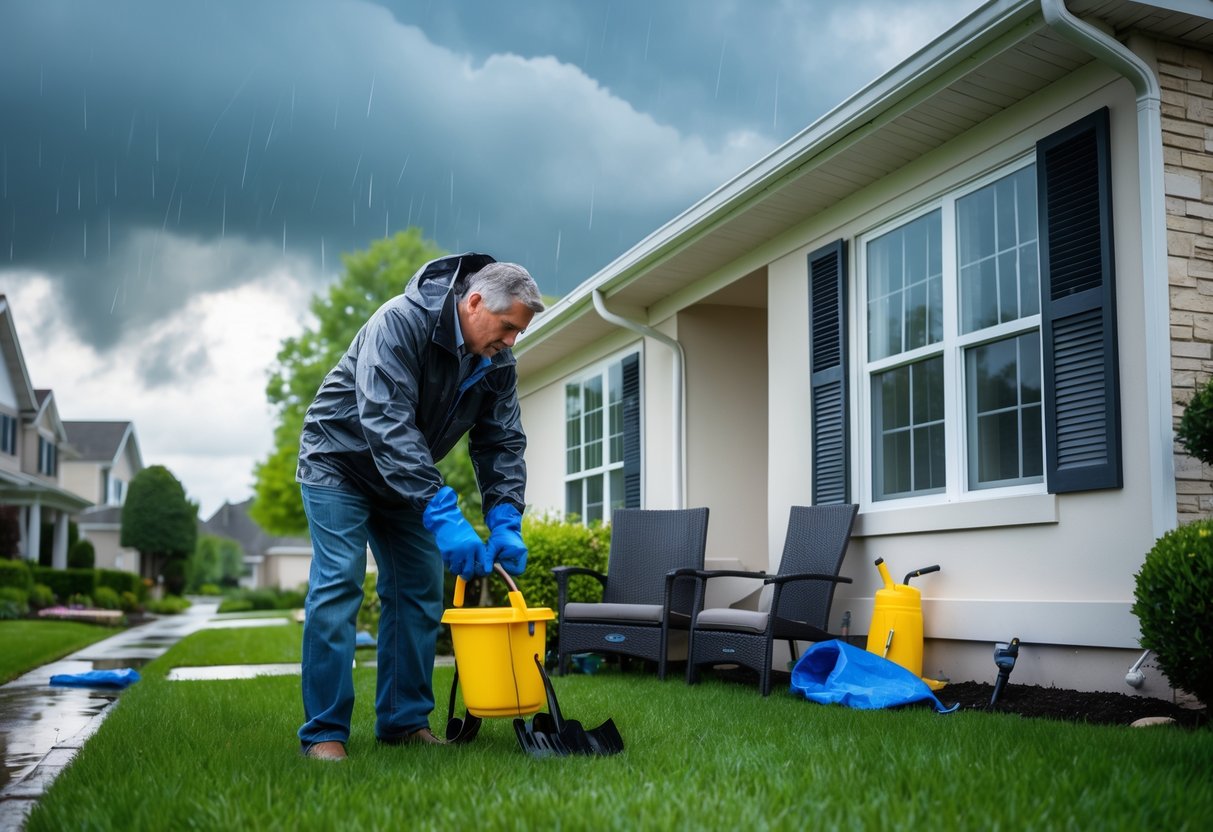
By taking a short amount of time to clear gutters, inspect seals around windows and doors, and secure outdoor items, anyone can reduce the risk of flooding or leaks. These tasks don’t require special tools or advanced skills—just a little attention before the downpour starts.
Storm preparation also means thinking ahead about power outages and access to emergency supplies. Having flashlights, batteries, and important documents ready can make a stressful situation much easier to handle.
Key Takeaways
- Stay alert to weather updates and warnings
- Protect the home by securing weak spots and outdoor items
- Keep essential supplies and plans ready before heavy rain arrives
Monitor Weather Forecasts and Warnings

Accurate weather forecasts give people time to prepare for heavy rains, flooding, and other storm impacts. Knowing when to act, where to go, and how to respond can reduce risks to both property and personal safety.
Stay Updated on Weather Alerts
Weather alerts often change quickly, especially during severe storms. People should check updates from trusted sources such as the National Weather Service, local meteorological agencies, or reliable weather apps.
Alerts come in different levels, such as watch and warning. A watch means conditions are possible, while a warning means the event is happening or about to happen. Knowing the difference helps decide whether to stay alert or take immediate action.
It is also smart to enable push notifications on mobile devices. Many apps and government alert systems send real-time warnings about flash floods, severe thunderstorms, or tornadoes. These alerts can arrive faster than television or radio broadcasts.
Families should agree on how they will share updates if power or cell service goes down. A battery-powered radio or NOAA weather radio ensures they can still receive critical information when other systems fail.
Understand Storm Surge and Flooding Risks
Heavy rain and storm surge can cause dangerous flooding in both coastal and inland areas. Storm surge happens when winds push seawater onto land, often during tropical storms or hurricanes. Even a few feet of surge can flood roads, homes, and utilities.
Flooding is not limited to coastal regions. Rivers, creeks, and drainage systems can overflow during prolonged rainfall. Low-lying neighborhoods and areas with poor drainage face the highest risk.
People should review local flood maps to see if their property lies in a flood-prone area. Many city and county websites provide this information. Insurance policies often exclude flood damage, so separate coverage may be necessary.
To prepare, residents can:
- Keep sandbags or barriers ready in flood-prone zones.
- Move valuables and electronics to higher floors.
- Avoid driving through flooded roads, since water depth is often hard to judge.
Know Evacuation Routes
When storms bring the risk of flooding or storm surge, evacuation may be the safest choice. Local governments usually publish official evacuation routes that lead to higher ground or designated shelters.
Residents should learn these routes in advance and practice them if possible. Roads can close quickly during heavy rain, so knowing alternate paths is important.
A simple table can help organize this information:
| Route | Destination | Notes |
|---|---|---|
| Route A | Community Shelter | Primary route, may flood early |
| Route B | Highway Exit 12 | Backup option, longer distance |
| Route C | High School Gym | Pet-friendly shelter |
Families should plan how to travel together and where to meet if separated. Keeping a full tank of gas and an emergency kit in the car makes evacuation safer and faster.
Pets and essential documents should also be part of the plan. Leaving without them can cause problems later when access to the area is restricted.
Protect Your Home’s Exterior
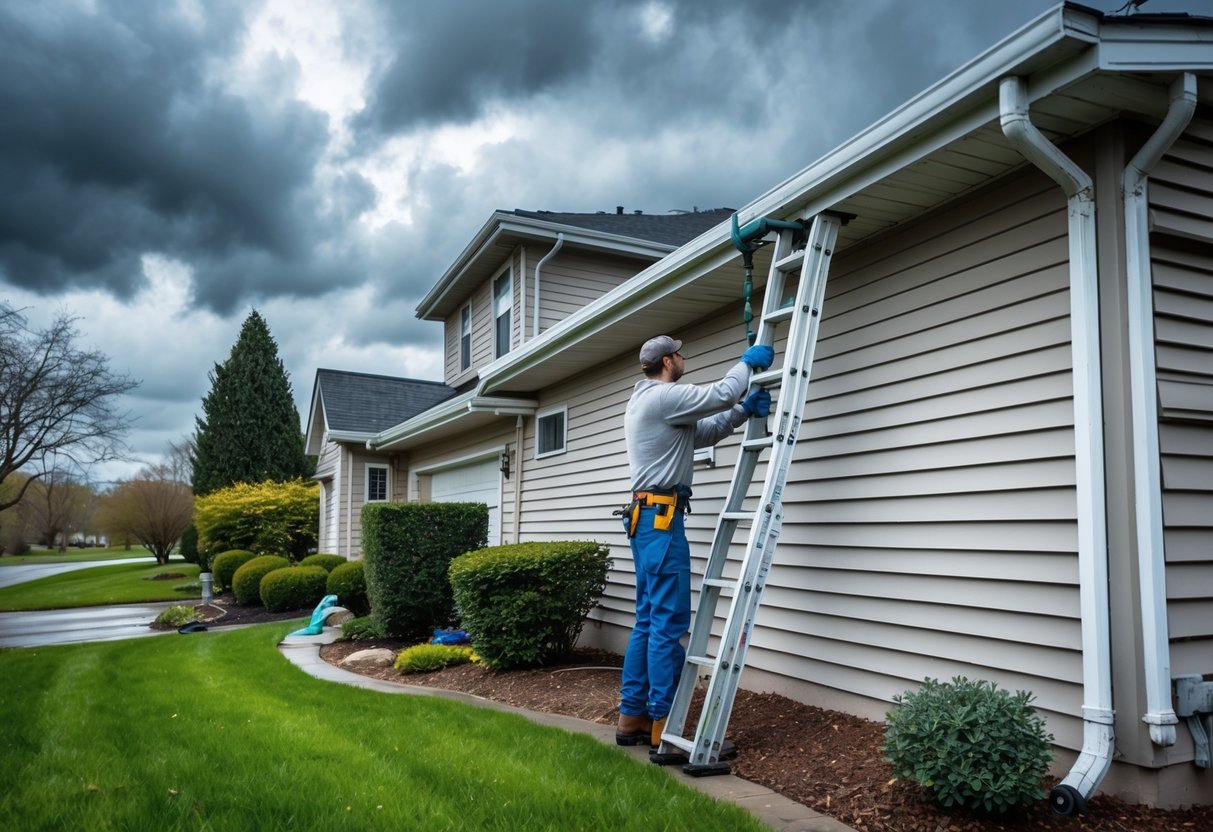
Strong rain and wind often cause the most damage to the outside of a house. Regular checks and simple upgrades reduce the chance of leaks, broken surfaces, and costly repairs.
Inspect and Repair Roof and Gutters
The roof and gutter system handle the first impact of heavy rain. Loose shingles, cracked tiles, or damaged flashing let water seep inside, leading to stains, rot, or mold. A yearly roof inspection, plus a check after major storms, helps catch problems early.
Gutters need to stay clear to move water away from the house. Leaves, sticks, and dirt clog downspouts, causing water to spill over and pool near the foundation. Cleaning gutters before storm season and flushing them with a hose ensures they drain correctly.
Downspouts should extend at least a few feet away from the foundation. Extensions or splash blocks keep water from soaking into the soil right next to the house, lowering the risk of basement leaks.
Quick checklist:
- Replace missing or broken shingles.
- Seal gaps around flashing.
- Clear gutters and test with water.
- Redirect downspouts away from the house.
Seal Windows, Doors, and Foundation
Even small gaps around windows or doors allow rain to enter. Water intrusion here often shows as damp spots, peeling paint, or warped frames. Applying caulk or adding weatherstripping creates a tighter seal that blocks both water and drafts.
Doors and sliding glass panels should close firmly without gaps. If the fit is loose, adjusting hinges or adding door sweeps helps. For homes in storm-prone regions, sealing cracks in the foundation is also important. Rainwater that collects near the base of the house can seep inside through even small openings.
A simple way to check is by looking for visible cracks or testing with a flashlight at night to see if light passes through gaps. Repair materials like hydraulic cement or masonry sealant can close foundation leaks before they become larger problems.
Install or Check Storm Shutters
Windows are one of the most fragile parts of a home during severe weather. Flying debris or strong gusts can shatter glass, leading to water damage inside. Storm shutters add a solid barrier that protects against both wind and rain.
If shutters are already in place, they should be checked for rusted hardware, loose hinges, or missing fasteners. Damaged shutters may fail when they are needed most. Homeowners without shutters can install permanent metal or accordion-style units, or use temporary plywood panels as a budget option.
When installing storm shutters, proper fit is critical. They should cover the full window frame with no gaps along the sides. A secure installation helps keep the glass intact and reduces the chance of leaks or structural damage during a storm.
Types of storm shutters:
- Accordion shutters: Fold out quickly, good for repeated use.
- Roll-down shutters: Operated by hand crank or motor.
- Plywood panels: Inexpensive, but require storage space and pre-cut sizing.
Secure Outdoor Areas
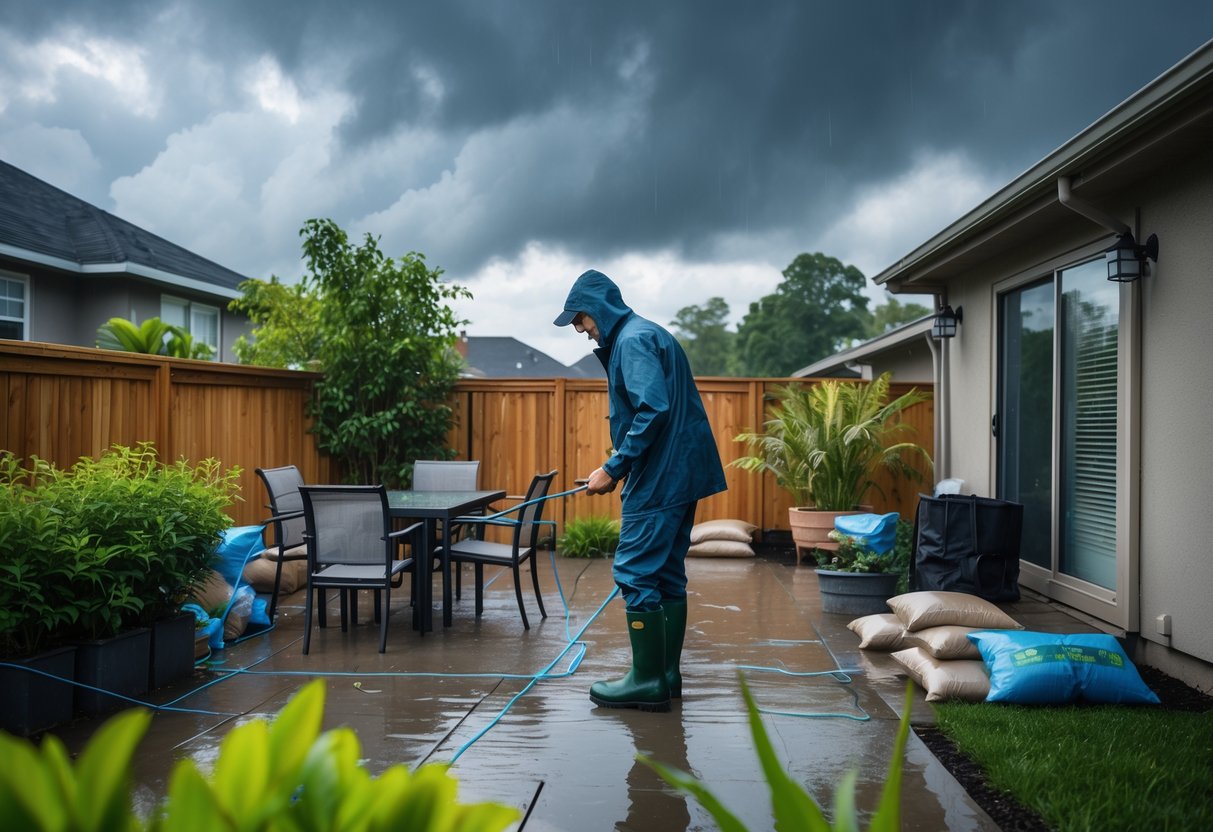
Heavy rain and strong wind can turn everyday items in a yard into hazards. Loose furniture, weak branches, and unreinforced garage doors often cause the most damage during storms, but simple steps can reduce these risks.
Secure Outdoor Furniture and Objects
Patio chairs, tables, grills, and potted plants can shift or become airborne in high winds. Even heavy items may not stay in place once gusts reach storm levels. Moving them indoors is the safest option. A garage, shed, or covered porch offers protection while keeping the yard clear.
If storage space is limited, tie down objects with heavy-duty straps or bungee cords. Anchoring items to fixed structures like fences or posts adds stability. For smaller objects such as garden tools or decorations, sealed storage bins are effective.
Consider creating a quick checklist before each storm:
- Move lightweight furniture inside.
- Secure grills and larger items with straps.
- Store cushions and umbrellas in waterproof containers.
These steps prevent damage to both property and nearby structures.
Trim Trees and Shrubs
Branches that hang over roofs, windows, or power lines can break under storm pressure. Dead or weak limbs are especially prone to snapping during heavy rain and wind. Regular trimming lowers the chance of falling debris and keeps trees healthier.
Focus first on branches within falling distance of the house. Shrubs near windows should also be cut back to reduce impact if wind pushes them against glass. A clean cut with proper tools helps prevent disease and keeps plants strong.
For larger trees, professional trimming may be necessary. Arborists can safely remove high limbs and check for hidden weaknesses. This reduces the chance of structural damage while keeping the yard safer during severe weather.
Reinforce Garage Doors
Garage doors are often the largest entry point for wind during a storm. Standard models can bend or collapse, which may lead to roof or wall damage. Reinforcing the door helps maintain the home’s overall stability.
A retrofit kit adds braces or horizontal supports that strengthen the door against pressure. In areas with frequent storms, hurricane-rated garage doors provide even more protection. These models are designed to withstand strong winds and reduce the chance of failure.
Homeowners should also check the door’s tracks and hardware. Tightening loose bolts and ensuring the rollers move smoothly improves performance. Adding a floor seal can help keep water from seeping under the door during heavy rain.
Prepare for Power Outages
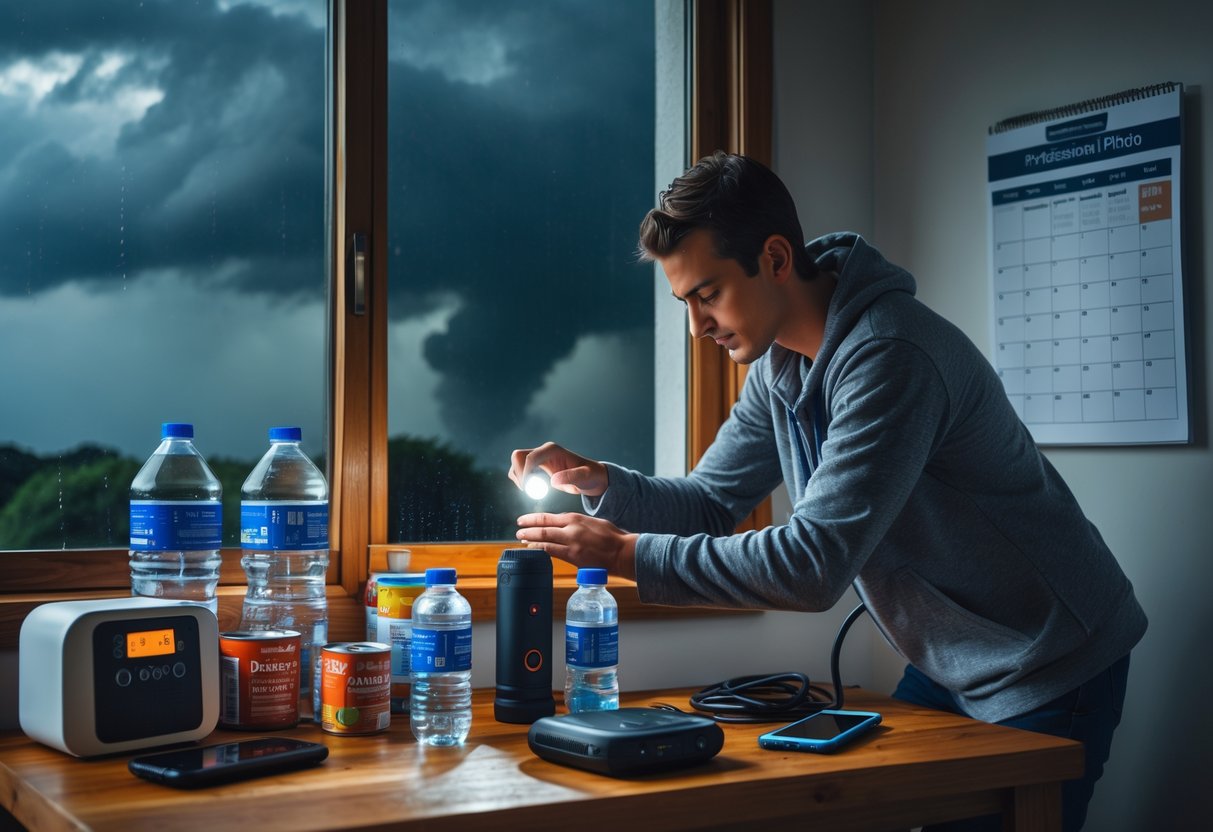
Heavy rain often leads to power failures that can last hours or even days. Families stay safer and more comfortable when they have working light sources, backup power options, and basic protection for electronics.
Check Flashlights and Batteries
Flashlights are safer than candles during outages, especially in homes with children or pets. Each household member should have a dedicated flashlight stored in an easy-to-reach location. LED flashlights are preferred because they use less power and provide brighter light.
Batteries should be checked at least once every few months. A simple habit is to test them during daylight saving time changes. Keeping a small supply of fresh AA, AAA, and D batteries ensures that flashlights, radios, and other small devices remain usable.
Rechargeable flashlights are also useful, but they should be fully charged before storms. Some models include hand-crank or solar charging features, which add reliability when outlets are unavailable. A small headlamp can also be helpful, leaving hands free for tasks like preparing food or checking breakers.
Quick Tips:
- Store flashlights in bedrooms, kitchen, and main living areas.
- Avoid relying on phone flashlights, since battery life is limited.
- Use labeled bins or drawers for batteries to make them easy to find.
Set Up Generator and Battery Backup
A generator provides temporary power for essential appliances such as refrigerators, sump pumps, or medical equipment. Portable models should be placed outside, at least 20 feet from doors and windows, to prevent carbon monoxide buildup. Fuel should be stored safely in approved containers and rotated regularly to keep it fresh.
Battery backup systems are another option, especially for smaller needs. A portable power station can charge phones, laptops, and small fans. Unlike generators, they run silently and don’t require fuel, making them useful indoors.
Families should decide which appliances matter most and size their backup accordingly. For example, a refrigerator may need 600–800 watts, while a sump pump could require more. Keeping a written list of wattage needs helps avoid overloading the generator.
Checklist:
- Test the generator before storms.
- Keep extension cords rated for outdoor use.
- Charge battery packs fully in advance.
Safeguard Electronics with Surge Protectors
Power outages often come with sudden surges when electricity is restored. These spikes can damage sensitive devices like computers, televisions, and routers. A quality surge protector reduces this risk by diverting excess electricity away from equipment.
Not all power strips have surge protection. Look for models with a joule rating of at least 1,000 for basic household electronics. Higher ratings offer longer-lasting protection. Some units also include USB ports for charging small devices.
Critical electronics, such as modems or medical equipment, may benefit from an uninterruptible power supply (UPS). A UPS provides short-term battery power and surge protection in one unit, giving users time to shut down devices safely.
Examples of what to protect:
- Home office computers
- Wi-Fi routers
- Televisions and game consoles
- Medical devices requiring stable power
By combining surge protectors with careful planning, households can avoid costly replacements and keep essential equipment safe when the grid becomes unstable.
Stock Emergency Supplies
People stay safer during heavy rains when they have the right emergency supplies ready. A well-prepared home includes basic survival items, safe food and water, and medical essentials that can be accessed quickly if normal services are disrupted.
Assemble an Emergency Kit
An emergency kit should be packed in a sturdy bag or container that is easy to carry. It must include tools and supplies that cover light, communication, and basic survival needs.
Key items often include:
- Flashlights with extra batteries
- NOAA weather radio or hand-crank radio
- Portable phone charger or power bank
- Multi-tool or pocket knife
- Blankets or sleeping bags
Families should also include personal hygiene items like soap, wipes, and toilet paper. Storing important documents in waterproof pouches helps protect identification and insurance papers.
The kit should be checked at least once a season to replace expired batteries, update documents, and add items for children, pets, or elderly family members.
Store Non-Perishable Food and Water
Food and water are critical when flooding or power outages limit access to stores. Experts recommend at least one gallon of water per person per day for three days. This covers both drinking and basic sanitation.
Non-perishable food should be easy to prepare without cooking. Good options include:
- Canned vegetables, beans, and meats
- Granola bars and trail mix
- Peanut butter
- Ready-to-eat packaged meals
A manual can opener is essential since electric ones may not work during outages. Families with infants should store formula and baby food, while pet owners should keep extra food for animals.
It helps to rotate supplies every six months, using older items before they expire and replacing them with fresh stock.
Check First Aid Kit and Medications
A complete first aid kit allows people to treat minor injuries when medical help is delayed. It should contain:
- Adhesive bandages and sterile gauze
- Antiseptic wipes and antibiotic ointment
- Scissors and tweezers
- Thermometer
- Gloves and face masks
Prescription medications must be stored in labeled containers with enough supply for several days. Copies of prescriptions should be kept in case refills are needed after a storm.
Those with chronic conditions, such as asthma or diabetes, should include backup inhalers, insulin, or related supplies. Families should also pack over-the-counter medicines for pain, fever, and allergies.
Regularly reviewing the kit ensures nothing is missing or expired when it is needed most.
Review Insurance and Emergency Plans
Protecting property and family during heavy rains requires more than supplies and quick fixes. People need to confirm their financial coverage, set clear communication steps, and record what they own to make recovery easier.
Review Insurance Policies
Many homeowners assume their insurance covers all storm damage, but that is often not true. Standard homeowner policies may exclude flooding, sewer backup, or wind-driven rain. People should check their policy documents and call their provider to confirm what is included.
It helps to ask specific questions such as:
- Does the policy cover flood damage?
- What is the deductible for wind or hail?
- Are temporary living expenses included if the home is not livable?
If coverage is missing, they can consider flood insurance or an endorsement for water damage. Renters should also confirm that their personal property is protected, since landlord policies usually cover only the building.
Keeping a digital copy of the policy in cloud storage or on a secure drive makes it easier to access during an emergency.
Create a Family Emergency Plan
An emergency plan gives each family member clear steps to follow when a storm arrives. Every plan should include a safe meeting place inside the home, such as a basement or interior room without windows. Families should also choose an outside meeting point if evacuation becomes necessary.
Communication is key. Everyone should know how to reach one another if cell service is down. Writing down important phone numbers and keeping them in wallets or backpacks is a simple step.
Transportation should also be part of the plan. Families need to know who will drive, which routes are safest, and what to do if roads flood. Practicing the plan at least once a year helps everyone remember their role.
Document Home Inventory
A home inventory speeds up insurance claims after storm damage. Without proof of ownership, families often face delays or reduced payouts. A simple list of items, photos, and receipts can make a big difference.
People can organize their inventory by room. For example:
| Room | Example Items | Notes |
|---|---|---|
| Living Room | Sofa, TV, lamps | Keep receipts if available |
| Kitchen | Appliances, cookware | Photograph serial numbers |
| Bedroom | Beds, clothing, electronics | Store photos in cloud storage |
Digital tools and apps make the process easier, but even a written notebook works if stored safely. Updating the list once a year, or after a major purchase, keeps the record accurate.
Frequently Asked Questions
Preparation for heavy rain involves stocking essential supplies, securing the home against water damage, and making sure systems like roofing, drainage, and power protection are in good condition. Reliable information sources and smart yard planning also play a role in reducing risks.
What are the essential items to include in an emergency kit for heavy rainstorms?
An emergency kit should contain flashlights, extra batteries, bottled water, and non-perishable food. A manual can opener, first-aid supplies, and any necessary medications are also important.
Storing important documents in a waterproof container and including a portable phone charger can help keep families safe and connected during outages.
How can I protect my home from flooding during severe weather conditions?
Check that gutters and downspouts direct water away from the foundation. A sump pump with a battery backup can reduce basement flooding.
Sandbags or water barriers may be used around entry points if flooding is expected. Sealing foundation cracks also helps limit water seepage.
What steps should I take to ensure my roof and gutters are prepared for a heavy downpour?
Inspect the roof for missing or damaged shingles and repair them before storms arrive. Flashing around chimneys and vents should be sealed tightly.
Gutters and downspouts need to be cleared of leaves and debris. Directing downspouts several feet away from the house prevents water from pooling near the foundation.
Are there specific landscaping considerations to help manage heavy rainfall?
Grading the yard so that water flows away from the home reduces the chance of foundation leaks. Installing a rain garden or using gravel beds can help absorb excess water.
Removing dead tree limbs and pruning branches lowers the risk of wind damage during storms.
How can I safeguard my electronics and appliances against potential storm-related power surges?
Using surge protectors for computers, televisions, and other sensitive devices can prevent damage. Unplugging non-essential appliances before a storm is another safe step.
A standby generator or uninterruptible power supply (UPS) can provide backup power for critical equipment.
What is the best way to stay informed about weather updates and alerts during a storm?
A battery-powered or hand-crank weather radio ensures access to alerts if power or internet service is lost.
Local weather apps and official emergency alert systems provide real-time updates. Signing up for community alert services can also keep residents informed quickly.