

When choosing between reflective roof coatings and a brand-new membrane system, the decision often comes down to cost, performance, and long-term value. Both options improve energy efficiency and reduce cooling expenses, but they differ in upfront investment, durability, and maintenance needs. Reflective coatings usually deliver faster payback with lower installation costs, while new membranes often provide longer service life and more consistent performance.
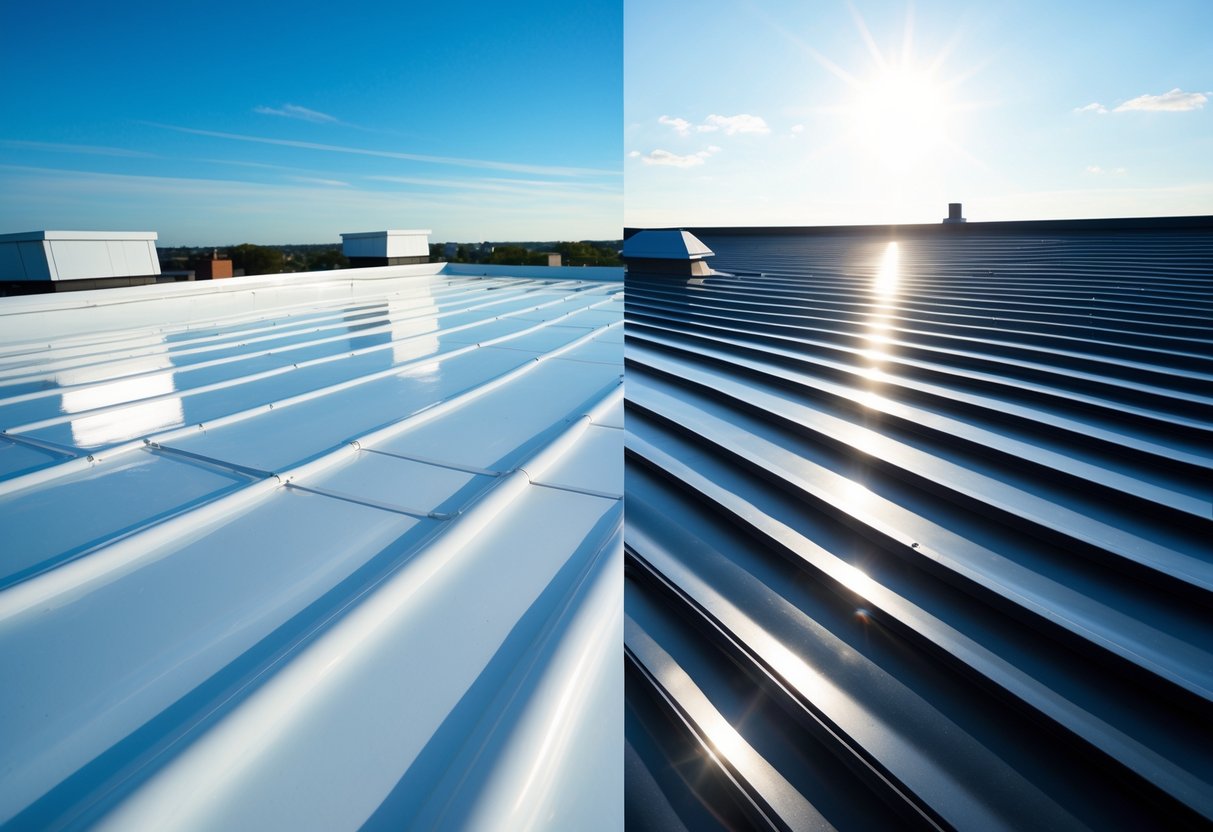
Property owners weighing these choices must consider how quickly they want returns and how long they plan to keep the building. Coatings can be applied over existing roofs with minimal disruption, making them attractive for short- to medium-term savings. Membrane systems, while more expensive at the start, may prove more cost-effective over decades due to fewer replacements and stronger resistance to weather.
Understanding the trade-offs between immediate savings and long-term durability helps clarify which option makes the most financial sense. The right choice depends on budget, building use, and long-term goals.
Key Takeaways
- Reflective coatings offer lower upfront costs and faster financial returns.
- New membranes provide longer lifespan and stronger durability.
- The best option depends on budget, building needs, and long-term plans.
Comparing Reflective Coatings and New Membrane Systems

Building owners often weigh reflective coatings against new membrane systems when considering energy savings, durability, and installation costs. Each option uses different roofing materials and methods, which affects performance, lifespan, and long-term maintenance needs.
Key Differences in Materials and Application
A roof coating system is applied directly over an existing roof surface. It usually comes as a liquid that is rolled or sprayed on, creating a seamless layer. This makes coatings useful for extending the service life of older roofs without a full replacement.
In contrast, a roof membrane is a complete roofing material system. Installing a new membrane often requires removing or covering the old roof and welding or adhering large sheets together. This process is more labor-intensive and requires specialized equipment.
Cost is another major difference. Coatings typically cost less up front, ranging from about $0.50 to $3 per square foot. Membranes often cost $3 to $7 per square foot due to higher material and labor needs.
The trade-off comes in longevity. Coatings may need reapplication every 5–10 years, while many membrane systems last 20 years or more with proper care.
Reflective Roofing Technologies Overview
Reflective coatings are designed to reduce heat absorption by reflecting sunlight. Many are white or light-colored acrylic, silicone, or polyurethane products. Their main advantage is lowering roof surface temperatures, which can reduce cooling costs by 10–30% depending on climate and building type.
Performance depends on solar reflectance and thermal emissivity. High reflectance keeps heat out, while emissivity helps release stored heat. Dirt buildup and weathering can reduce reflectivity, so periodic cleaning and maintenance are important.
Reflective coatings are flexible and can be applied to different roofing materials, including metal, modified bitumen, and aged single-ply membranes. They are often chosen for retrofits where extending the life of the existing roof is more practical than a full replacement.
Types of Roofing Membranes
Single-ply membranes are one of the most common systems. These include TPO (thermoplastic polyolefin), PVC (polyvinyl chloride), and EPDM (ethylene propylene diene monomer). Each offers different balances of cost, flexibility, and resistance to UV and chemicals.
Other membrane options include modified bitumen and built-up roofing (BUR) systems. These are thicker and more layered, providing strong protection against weather and punctures.
Unlike coatings, membranes are structural systems that provide both waterproofing and durability. Many are also available in reflective white finishes, which combine the benefits of energy efficiency with long service life.
Membranes usually require professional installation, but they provide a longer-term solution for facilities needing a full roof replacement.
Cost Analysis and Financial Payback

Building owners and facility managers often weigh reflective coatings against new membrane systems by looking at upfront costs, ongoing maintenance, and long-term financial return. Each option carries trade-offs in price, durability, and payback speed that directly affect the total cost of ownership.
Initial Installation and Material Costs
Reflective coatings usually present the lower entry point. Materials often range from $2–$4 per square foot, and installation can be completed over an existing roof with minimal preparation. This reduces labor costs and avoids the expense of a full roof replacement.
New reflective membrane systems cost more at the start. Material prices typically fall between $4–$8 per square foot, and installation requires specialized labor, adhesives, and seam welding. In some cases, removal of the old roof adds further expense.
For commercial roofing projects, coatings appeal to those seeking fast payback and minimal disruption to operations. Membranes, while more expensive upfront, are often chosen for their longer service life and higher durability.
Maintenance and Longevity Considerations
Reflective coatings require regular care to maintain performance. Facility managers often schedule inspections twice a year, with recoating needed every 5–10 years. While each reapplication is less costly than a new roof, the recurring expense adds up over time.
Membrane systems demand less frequent upkeep. Routine inspections focus on seams and flashing, and repairs usually involve small sections. With a lifespan of 20–30 years, membranes can outlast coatings by more than double, reducing the frequency of major interventions.
For building owners, the decision often hinges on whether predictable long-term performance or lower short-term costs better suits their financial strategy.
Total Cost of Ownership Over Time
The full financial picture emerges when initial costs and maintenance are combined. A reflective coating may save money in the first decade, especially for large commercial roofs where quick energy savings offset installation costs. However, repeated recoating cycles can narrow the gap over 20–30 years.
Membrane systems, despite higher upfront investment, often provide steadier costs across their lifespan. Energy savings remain consistent, and fewer major repairs are needed. For facility managers planning long-term budgets, membranes can deliver a more predictable return, while coatings favor those prioritizing immediate payback and lower initial spending.
Energy Efficiency and Environmental Impact
Both reflective coatings and new membrane roofing systems directly affect how much energy a building uses and how it interacts with the environment. Their performance influences cooling costs, surface temperatures, and compliance with environmental standards.
Energy Savings and Cooling Costs
A roof that reflects sunlight reduces the amount of heat entering a building, lowering air conditioning demand. Studies show that cool roof coatings can cut cooling energy use by 10–15% in many climates. This translates into savings that range from $0.10–$0.20 per square foot annually depending on building size and local energy rates.
Reflective membranes also reduce cooling costs but tend to provide more consistent performance over time. Their factory-produced surfaces maintain reflectivity longer, which helps stabilize long-term energy bills.
| Roofing Type | Typical Energy Savings | Maintenance Needs |
|---|---|---|
| Cool Roof Coating | Higher initial savings | Recoating every 5–10 years |
| Reflective Membrane | Steady long-term savings | Minimal upkeep |
The choice often depends on whether the owner values higher short-term savings or predictable long-term performance.
Solar Reflectance and Urban Heat Island Effect
Solar reflectance is the percentage of sunlight a roof reflects. Cool roof coatings often achieve reflectance levels of 70–90% when newly applied, which can reduce roof surface temperatures by up to 100°F compared to dark roofs.
Reflective membranes typically reflect 60–80%, but their durability means reflectance levels degrade more slowly. This consistent performance helps maintain building efficiency in regions with harsh weather.
In dense urban areas, reflective roofs also reduce the urban heat island effect, where city surfaces trap heat and raise local temperatures. Large-scale adoption of reflective coatings and membranes can lower neighborhood cooling demand and improve outdoor comfort.
Environmental Certifications and Standards
Many building codes and sustainability programs recognize the role of reflective roofing in reducing energy use. Products with high solar reflectance and thermal emittance can contribute to LEED credits, Energy Star ratings, and compliance with ASHRAE 90.1 standards.
Cool roof coatings often meet or exceed these benchmarks due to their high reflectivity and low volatile organic compound (VOC) formulations. They can also be reapplied without removing the existing roof, reducing construction waste.
Reflective membranes may carry certifications for recyclability and long service life. Their durability helps extend replacement cycles, which lowers the environmental impact of manufacturing and disposal. Both systems support compliance with modern efficiency and sustainability requirements.
Performance, Durability, and Suitability
The way a roof system holds up depends on how well it resists weather, how it bonds to the roof deck, and how it performs in different climates. Each factor affects service life, maintenance costs, and whether a reflective coating or a new membrane offers the better payback.
Weather Resistance and Longevity
Reflective roof coatings form a thin protective layer, usually 20–30 mils thick. They reduce heat gain and UV damage but can wear faster in areas with heavy rain, hail, or extreme temperature swings. Recoating every 10–15 years is common to maintain performance.
Roof membranes, such as single-ply or multi-layer systems, are typically 45–60 mils thick. Their reinforced construction resists punctures, standing water, and foot traffic more effectively. Many membrane systems last 20–30 years before replacement is needed.
Key comparison:
| Factor | Reflective Coatings | Roof Membranes |
|---|---|---|
| Typical Thickness | 20–30 mils | 45–60 mils |
| Service Life | 10–15 years | 20–30 years |
| Maintenance | Recoating cycles | Periodic inspections |
For facilities exposed to severe storms or high traffic, membranes usually provide longer-lasting protection.
Compatibility With Existing Roof Decks
Coatings often work well as a restoration option. They can be applied over many substrates, including metal, modified bitumen, and spray polyurethane foam (SPF). This makes coatings attractive when the roof deck is still sound but needs improved reflectivity and waterproofing.
However, coatings may not adhere properly if the substrate is damp, contaminated, or structurally compromised. Surface preparation is critical, and failure to address deck issues can shorten performance.
Membranes require more invasive installation but provide a complete new system. They can be installed over certain decks with a cover board or insulation layer, creating a uniform surface. For aging or uneven decks, a new membrane often ensures better long-term results than a coating alone.
Climate and Building-Specific Factors
In hot, sunny regions, reflective coatings can deliver immediate cooling cost reductions by raising roof albedo. Their lighter color reflects solar radiation and reduces HVAC loads, especially in buildings with large, flat decks.
In colder climates, coatings still protect against UV but may not offset heating demands. Membranes, with thicker layers and sealed seams, perform better in freeze-thaw cycles and areas with heavy snow or standing water.
Building use also matters. Industrial sites with chemical exposure or frequent rooftop traffic often benefit from membranes due to their durability. By contrast, low-traffic office buildings in warm climates may find coatings a cost-effective way to extend roof life while lowering cooling bills.
Decision Factors for Building Owners and Facility Managers
Building owners and facility managers often weigh cost, service life, and disruption when deciding between reflective coatings and a new membrane. The choice depends on roof condition, budget priorities, and long-term performance needs rather than a single factor.
When to Choose Reflective Coatings
Reflective coatings work best when the existing roof is structurally sound but nearing the end of its warranty. They extend service life by adding a protective, reflective layer without the need for full tear-off.
Facility managers often choose coatings for lower upfront cost. Typical installation ranges from $0.75 to $2.50 per square foot, which is significantly less than a full replacement. Coatings also minimize downtime since most projects finish within a few days.
These systems provide strong energy efficiency benefits by reducing roof surface temperatures. In hot climates, this can lower cooling demand and reduce peak energy costs, which is valuable for large commercial buildings.
However, coatings require ongoing maintenance. Recoating every 10–15 years is common, and quarterly inspections help maintain performance. For roofs with frequent foot traffic or severe weather exposure, coatings may need reinforcement or more frequent touch-ups.
When a New Membrane Is the Better Investment
A new membrane becomes the better choice when the existing roof shows structural failures, trapped moisture, or widespread damage. In these cases, applying a coating would only delay necessary replacement and increase long-term costs.
While new membranes cost more upfront—typically $3.00 to $6.00 per square foot—they offer 20–30 years of service life with fewer maintenance cycles. Their multi-layer construction provides stronger resistance to foot traffic, ponding water, and severe weather.
Owners and managers also value the comprehensive warranties that often accompany new membrane systems. These warranties reduce risk and provide predictable performance expectations, which is important for large facilities with strict operational demands.
For industrial environments or high-traffic roofs, membranes provide durability that coatings cannot match. The longer lifespan and reduced repair frequency can offset the higher initial investment, especially for buildings with long-term ownership plans.
Industry Trends and Expert Recommendations
The roofing industry shows steady growth in both reflective coatings and single-ply membranes, but applications differ. Coatings are increasingly used for roof recover projects where cost and sustainability are priorities. Membranes dominate in new construction and full replacement projects.
Experts recommend that facility managers start with a roof condition assessment. If the substrate is dry and intact, coatings can extend life at a lower cost. If damage is extensive, replacement is the more reliable path.
Sustainability goals also influence decisions. Coatings reduce landfill waste by avoiding tear-offs, while membranes are more recyclable at end of life. Building owners often weigh these factors alongside energy savings and warranty coverage.
Industry consultants stress that ownership timeline matters. Short-term owners may favor coatings for quick payback, while long-term owners often see membranes as the stronger financial decision.
Frequently Asked Questions
Reflective coatings and new membranes differ in cost, durability, and energy performance. Their benefits depend on factors such as installation conditions, climate, and long-term maintenance needs.
What are the cost-benefit considerations when choosing between reflective coatings and new membranes for roofing?
Reflective coatings usually cost less upfront, often between $0.75 and $2.50 per square foot. They can extend the life of an existing roof without full replacement.
New membranes cost more, often $3.00 to $6.00 per square foot, but they provide longer service life and stronger warranties. The higher initial expense may pay back through reduced repairs and fewer replacements.
How do reflective coatings compare to new membranes in terms of energy efficiency improvements?
Reflective coatings can raise surface reflectivity significantly, reducing heat absorption and lowering cooling costs by up to 25–60% in some climates. Their effectiveness may decrease over time without cleaning or recoating.
New membranes also provide strong reflectivity but tend to hold performance longer due to factory-applied surfaces that resist degradation.
What is the expected lifespan of reflective coatings versus new roofing membranes?
Reflective coatings typically last 10–15 years with proper care. Many systems require recoating every 5–7 years to maintain performance.
New membranes often last 20–30 years, depending on material type and environmental exposure. Their multi-layer construction makes them more resistant to physical and weather-related damage.
Can reflective coatings be applied to existing roofing membranes, and how does this impact their performance?
Yes, coatings can often be applied over existing membranes if the surface is in good condition. This reduces waste and avoids a full tear-off.
When applied correctly, coatings improve reflectivity and extend the roof’s service life. However, performance depends on the underlying roof’s stability and preparation before application.
What maintenance requirements are associated with reflective coatings compared to new membranes?
Reflective coatings require more frequent inspections and cleaning to maintain reflectivity. Recoating cycles add to long-term upkeep costs.
New membranes typically need less frequent maintenance. Semi-annual inspections are common, and repairs are usually needed less often due to stronger construction.
How do environmental conditions influence the decision between reflective coatings and new membrane installations?
In mild climates, coatings perform well and offer cost savings. In harsher climates with heavy rain, hail, or extreme heat, coatings may degrade faster and need more upkeep.
New membranes handle severe weather and heavy foot traffic better. Their durability makes them a stronger choice where roofs face demanding conditions.